1
Reddit is one of the web’s biggest experiments in community design: pseudonymous users, volunteer moderators, voting systems, recommendations, and a company trying to build a business around all of it.
That is why its scandals matter to designers and product teams. They are not just internet drama. They show what happens when a platform gets incentives, trust, moderation, privacy, or crisis response badly wrong.
15. WallStreetBets and GameStop
What happened: In early 2021, the investing community r/WallStreetBets became a major hub for discussion about GameStop stock. Users posted memes, analysis, trade screenshots, and calls to buy shares or options in a company that many believed had been heavily shorted.
GameStop’s share price rose dramatically. Hedge funds took losses, Robinhood restricted purchases of GameStop and some other stocks, and Congress held hearings. A subreddit best known for wild bets and self-deprecating humour had suddenly become part of a global financial event.
How it ended: The extreme volatility cooled. The U.S. Securities and Exchange Commission examined the market events and described exceptional trading volume and volatility. Reddit itself was not found to have orchestrated illegal market manipulation.
Why it matters: This was not a classic moderation scandal, but it showed how a platform’s social features can turn discussion into collective power. Upvotes, group identity, social proof, and live conversation can influence behaviour far beyond the app itself.
14. The API blackout
What happened: In 2023, Reddit introduced paid access to its API, the system that allowed third-party apps to connect to Reddit. Developers said the new fees would force popular apps, including Apollo, to close. Moderators also worried about losing tools they used for accessibility, spam control, and community management.
Thousands of communities went private or restricted access in protest. Reddit’s leadership defended the decision, but many users felt the company had dismissed the people who had helped make the platform more usable.
How it ended: Reddit kept the new API model. Apollo and several other major third-party apps shut down on June 30, 2023. Reddit continued to allow free API access for certain non-commercial accessibility apps and moderator tools.
Why it matters: A technical pricing decision can become a trust disaster when a platform ignores the people whose daily workflow depends on the tools being changed.
13. The CEO who edited users’ comments
What happened: In 2016, Reddit CEO Steve Huffman used administrator access to alter comments insulting him in the pro-Trump community r/The_Donald.
Users had been attacking Huffman, whose username is u/spez. He changed some references to his username into references to subreddit moderators, making the comments appear to target different people.
How it ended: Huffman admitted what he had done and apologized. The edits were restored and did not continue.
Why it matters: A discussion platform depends on users believing that posts and comments are authentic. If staff can secretly rewrite comments, even briefly, that trust is damaged.
12. The r/FatPeopleHate ban revolt
What happened: In 2015, Reddit banned several communities under an anti-harassment policy, including r/FatPeopleHate. The community was built around mocking and targeting people and had a large user base.
The bans triggered a major backlash. Some users argued that Reddit was abandoning its old free-speech culture, while others argued that the company had tolerated harassment for far too long.
How it ended: The communities stayed banned. Reddit continued moving toward more active moderation and clearer policies on harassment.
Why it matters: Moderation is not just about removing content. A platform also has to explain its rules, show how it applies them, and prepare for the backlash from users who preferred the old system.
11. The alt-right subreddit bans
What happened: In 2017, Reddit banned the communities r/altright and r/alternativeright for violating rules against posting people’s private information.
Because the communities were politically charged, the bans immediately became part of a wider debate about censorship and political bias online.
How it ended: The communities remained banned. Reddit said the action was based on its rules against posting private information, not on political affiliation.
Why it matters: Specific rules are easier to enforce and defend than vague promises to remove “bad” communities. Users may still disagree, but they can understand the line.
10. The incel ban
What happened: In 2017, Reddit banned r/incels, a community focused on “involuntary celibacy.” The group had attracted attention for misogynistic content and posts advocating or glorifying violence against women.
It became a clear example of how an online community can normalize extreme beliefs through repetition, group identity, and constant validation from other members.
How it ended: Reddit banned the community under its rules against content that encourages or glorifies violence.
Why it matters: Online communities do not merely host opinions. Their design can reward particular opinions with attention and status, making extreme ideas feel normal inside the group.
9. The r/NoNewNormal COVID misinformation fight
What happened: During the COVID-19 pandemic, r/NoNewNormal became a major community for opposition to public-health measures and for COVID misinformation.
More than 100 other communities protested and called on Reddit to take stronger action. Reddit initially quarantined the community, reducing its visibility and requiring users to opt in before viewing it.
How it ended: Reddit banned r/NoNewNormal in September 2021 for repeated policy violations and clarified its approach to COVID denialism.
Why it matters: Health misinformation is not just another online argument. When users make medical decisions based on it, a platform has to decide when allowing a debate becomes potentially amplifying harmful advice.
8. Reddit’s 2018 data breach
What happened: In 2018, Reddit disclosed that attackers had accessed some employee accounts protected by SMS-based two-factor authentication. The attackers accessed old database backups and source code.
One backup from 2007 included usernames, email addresses, and password information. Reddit said the passwords had been salted and hashed.
How it ended: Reddit disclosed the incident and urged users to use stronger passwords and app-based two-factor authentication rather than SMS where possible.
Why it matters: Security and privacy are user experience. Account protection may look like boring settings-page work until it fails and becomes the only part of the product anyone cares about.
7. The 2020 mass ban wave
What happened: In June 2020, Reddit revised its policy against hate and banned roughly 2,000 communities. The removals included r/The_Donald and r/ChapoTrapHouse.
It was one of Reddit’s biggest moderation actions and a major departure from its earlier hands-off approach.
How it ended: The communities stayed banned, and Reddit retained the updated policy. Most of the banned subreddits were inactive, but the high-profile removals made the policy shift impossible to ignore.
Why it matters: Problems rarely appear overnight. They grow while companies debate definitions, exceptions, and public reaction. By the time a platform acts, a necessary fix can still feel abrupt.
6. The r/The_Donald problem
What happened: r/The_Donald became one of Reddit’s largest pro-Trump communities and one of its most difficult moderation problems. It faced repeated criticism over harassment, conspiracy theories, violent rhetoric, and other rule-breaking content.
In 2019, Reddit quarantined the community, removing it from recommendations and requiring users to opt in before visiting.
How it ended: Reddit banned r/The_Donald in 2020. The company said the community repeatedly broke rules and that its moderators had failed to address the problems.
Why it matters: A quarantine can be a useful intervention only if it changes behaviour. Otherwise, it is simply a less visible version of the same problem.
5. The stolen celebrity-photo scandal
What happened: In 2014, private celebrity photos stolen in a hacking incident spread across the web. Reddit became a major hub for people sharing links to the material through a community called r/TheFappening.
The people in the images had not consented to the release, but the community treated the leak as a viral entertainment event.
How it ended: Reddit banned r/TheFappening and related communities. In 2015, it updated its rules to prohibit posting sexually explicit images without the subject’s consent.
Why it matters: A platform can technically follow copyright procedures and still completely miss the human harm. Good policy starts with what is happening to people, not just whether a legal notice has arrived.
4. r/Jailbait and r/Creepshots
What happened: Reddit’s early hands-off philosophy allowed communities including r/Jailbait and r/Creepshots to operate.
r/Jailbait featured sexualized images of underage girls. r/Creepshots featured photos of women taken without their knowledge. Both became symbols of how far Reddit’s old “we barely interfere” approach could go.
How it ended: Reddit banned r/Jailbait in 2011 and r/Creepshots in 2012 after major public backlash. Its current rules prohibit sexual exploitation, non-consensual intimate media, and harassment.
Why it matters: Being an open platform does not mean refusing to draw obvious safety boundaries. Every platform has rules; the choice is whether those rules protect people before or after a public disaster.
3. The Victoria Taylor firing and Reddit blackout
What happened: In 2015, Reddit fired Victoria Taylor, an employee who coordinated many of the site’s biggest Ask Me Anything interviews. Moderators said they received little warning, despite relying on her to help make those sessions work.
Hundreds of communities went private in protest. Large parts of Reddit became unavailable, exposing how much the site relied on unpaid moderators.
How it ended: Interim CEO Ellen Pao apologized for poor communication and loss of trust. Pao resigned days later, and Reddit co-founder Steve Huffman returned as CEO.
Why it matters: Moderators and community managers can look invisible when a platform is working. That does not make them unimportant. It means they are holding much more of the product together than the company realizes.
2. The Christchurch-video crisis and r/WatchPeopleDie
What happened: After the 2019 Christchurch mosque shootings, video recorded by the attacker spread across social media. Reddit faced scrutiny over r/WatchPeopleDie, a community devoted to videos of real deaths.
The community had long been controversial. When footage of the shooting was reposted there, it became part of the global challenge of stopping violent material and terrorist propaganda from spreading at internet speed.
How it ended: Reddit banned r/WatchPeopleDie for violating its rules against glorifying or encouraging violence. Other major platforms also removed copies of the footage, though stopping it from spreading everywhere proved extremely difficult.
Why it matters: A platform’s systems are not neutral once they help traumatic or extremist material travel faster. Crisis rules need to exist before the worst content imaginable appears.
1. The Boston Marathon witch hunt
What happened: After the 2013 Boston Marathon bombing, Reddit users created r/FindBostonBombers to identify suspects from publicly available photos, rumours, and scraps of information.
Instead of identifying the attackers, users falsely accused several innocent people. The best-known victim was Sunil Tripathi, a missing Brown University student whose name and photograph were circulated despite there being no evidence that he was involved.
How it ended: Reddit’s general manager apologized for the “online witch hunts and dangerous speculation.” Tripathi had disappeared before the bombing and was later found dead; authorities ruled his death a suicide, not a result of Reddit’s false accusations.
The subreddit was made private. That did not undo the harm to Tripathi’s family, who had to watch strangers publicly connect their missing loved one to a terrorist attack.
Why it matters: This is Reddit’s clearest warning about crowd behaviour. Features built around speed, upvotes, social proof, and collective certainty can create a dangerous illusion that the crowd knows what it is doing. In high-stakes situations, good design needs friction: slower sharing, stronger verification, and clear limits on public speculation.
What Reddit’s scandals teach anyone building online communities
The obvious lesson is that Reddit needs moderation. The more useful lesson is that moderation is only one part of product design.
A platform’s rules, reporting flows, recommendation systems, voting mechanics, administrator powers, privacy defaults, and communication style all shape user behaviour. They decide who gets attention, what spreads, what feels acceptable, and whether people trust the platform when something goes wrong.
The strongest communities are not the ones with no boundaries. They are the ones where users understand the boundaries, see them enforced fairly, and believe the system will protect them when things turn ugly.
Reddit’s history is a reminder that a platform is never neutral simply because it calls itself open. Design choices always shape behaviour. The only real choice is whether a company takes responsibility before the damage is done or after.

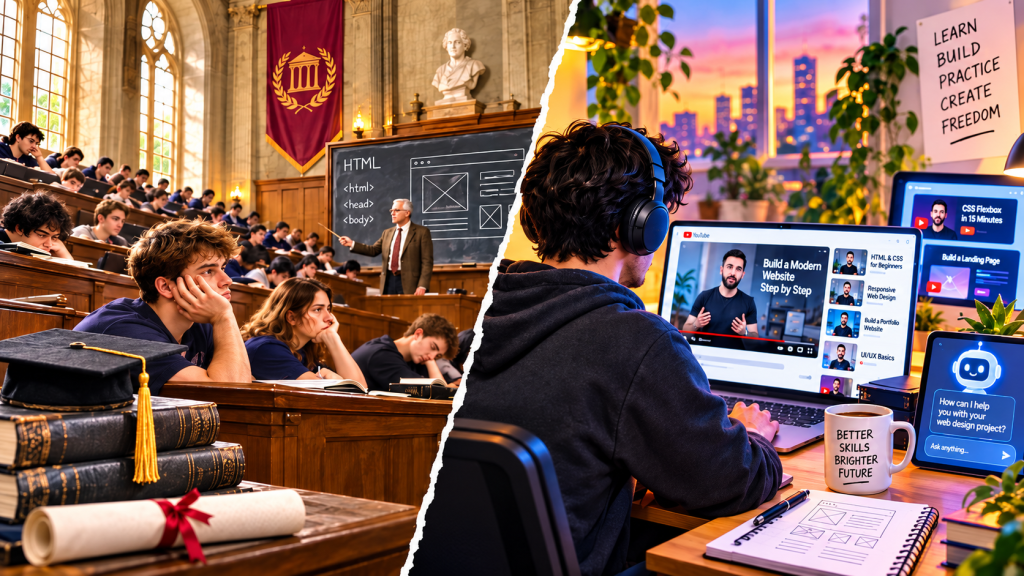
Web Design Schools Have a Giant YouTube University Problem — And AI Just Made It Worse
If you wanted to become a web designer 15 years ago, going to school made sense. You needed someone to teach you HTML, CSS, Photoshop, typography, UX and all the…

This Website Found More Than 5 Million Forgotten iPhone Videos… and It’s Weirdly Emotional
An old iPhone feature accidentally created a massive archive of random lives, bad camera work, dogs, vacations, and very normal afternoons. Now you can watch it one clip at a…

The Death of Apps Has Already Begun
We spent the last 15 years installing apps for everything. An app for email. An app for music. An app for banking. An app for editing photos. An app for…
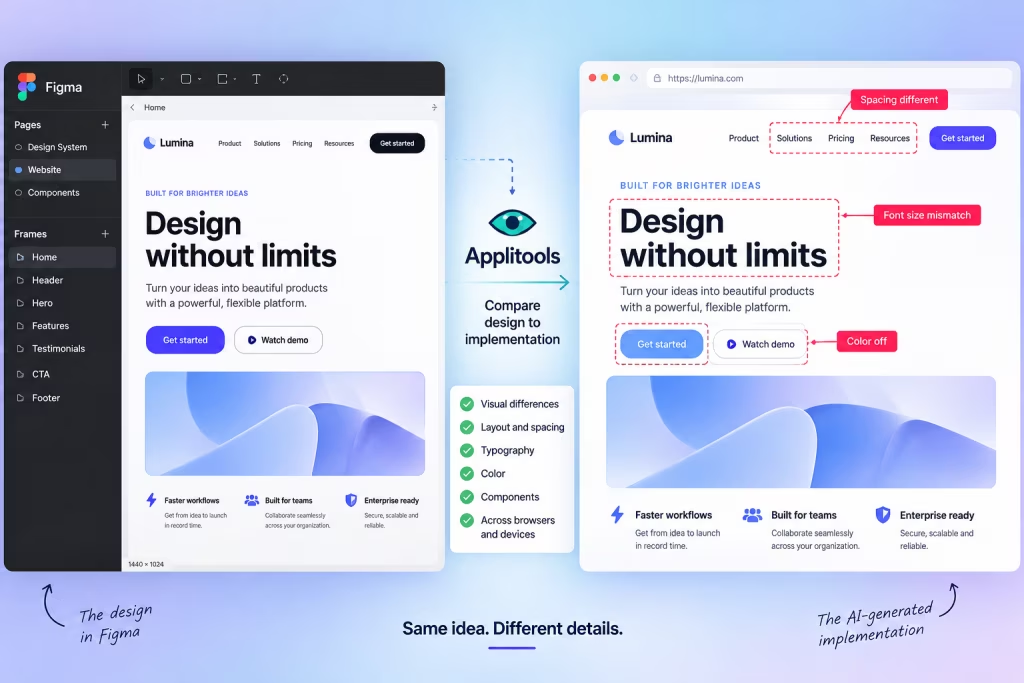
AI Can Build Your UI. Now Figma Can Tell It When It Screwed Up.
AI coding tools have become remarkably good at turning prompts into working interfaces. The awkward part comes afterward: does the thing they built actually look like the design? A new…
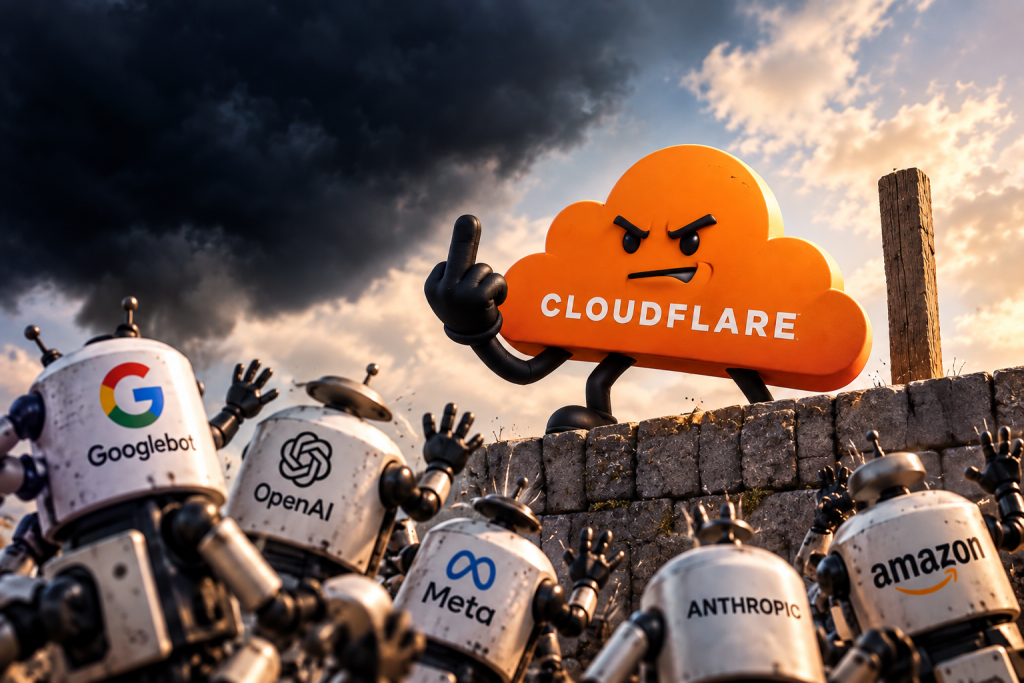
Cloudflare Just Gave AI Training Bots the Middle Finger
If you run a website, you probably want Google to crawl it. You probably don’t want every AI company on the planet helping itself to your content to train its models. Until…
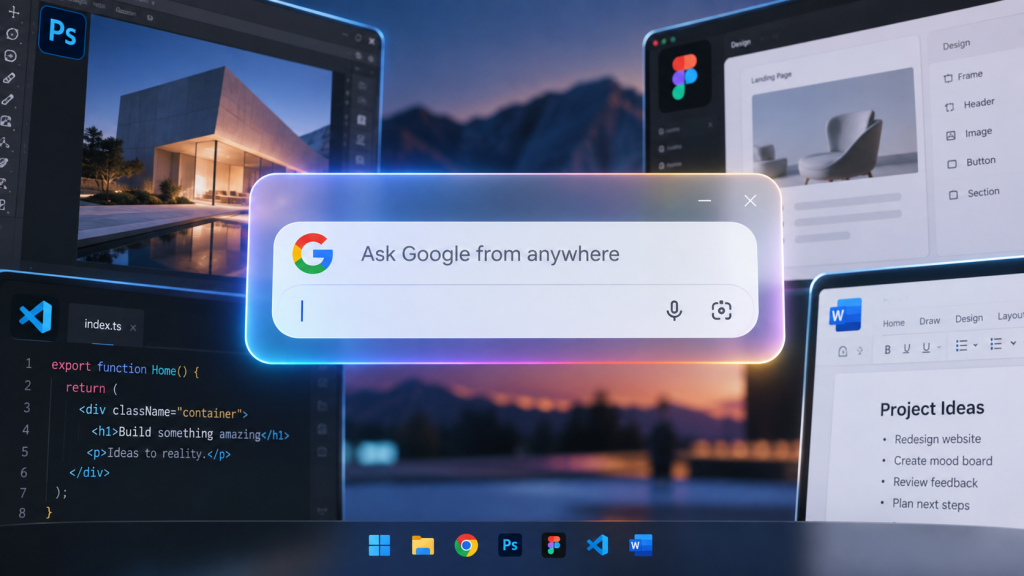
Google Is Testing a Search Bar That Works Outside Chrome
Google is quietly experimenting with a strange new version of Search: one that doesn’t seem particularly interested in staying inside Chrome. The experiment is known as Everywhere Omnibox, with “Loom” appearing in…