
1
We spent the last 15 years installing apps for everything. An app for email. An app for music. An app for banking. An app for editing photos. An app for ordering dinner. An app for booking flights. An app for spreadsheets. An app for taking notes. An app for figuring out which other apps we should install.
AI could make much of that feel ridiculous.
Not because AI is going to magically destroy every software company tomorrow, but because the fundamental idea behind the app—the idea that humans should learn an interface designed around a company’s software—suddenly looks surprisingly old-fashioned. The future might not be 200 better apps. It might be one intelligent interface that uses those 200 apps for you.
And the interesting part is that this isn’t entirely science fiction anymore. Apple is making app actions and data available to Apple Intelligence outside the apps themselves through App Intents. OpenAI has moved external apps directly into ChatGPT, while Google’s Gemini can interact with connected apps to perform tasks. The pieces of the post-app world are quietly being assembled while we’re still arguing about whether the Settings button should be in the top-right corner.
The App Was Always a Compromise
Think about what happens when you want to accomplish something today. You decide what you want to do, figure out which app can do it, open that app, navigate its interface, remember where the right feature lives and enter the information in whatever format the software expects. Then, very often, you repeat the whole process in another app.
We’ve become so accustomed to this that we barely notice how strange it is. Want to organize a vacation? You might bounce between a browser, maps, an airline site, a hotel app, your calendar, email, Notes, a weather service and perhaps a spreadsheet. The human is effectively the API connecting everything together.
AI flips that relationship around. Instead of opening eight pieces of software, imagine saying: “Plan a five-day trip to Tokyo in April. Keep the hotel under $250 a night, avoid overnight flights, put everything on my calendar and make me a packing list based on the forecast.”
That’s not really an app interaction anymore. That’s an intention—and intention may become the most important interface in computing.
Nobody Actually Wants to Use Software
This is the slightly uncomfortable truth the software industry doesn’t like admitting: most people don’t want software. They want outcomes.
Nobody wakes up excited because they get to open a spreadsheet. They want to understand their numbers. Nobody desperately wants to navigate an airline’s booking interface; they want to get to Paris. Nobody’s life ambition is to master the menus of a photo editor; they want the person standing behind them removed from a photograph.
For decades, software interfaces were necessary intermediaries between human intention and machine execution. AI is beginning to remove some of that intermediary, and that’s potentially a much bigger change than adding a chatbot to every product.
We’re already seeing the first version of this inside ChatGPT. OpenAI’s app system lets services appear directly inside a conversation, so someone can interact with an outside service without necessarily starting by opening its standalone app. Google is taking a similar approach with Gemini’s Connected Apps, which can use connected services to do things such as create calendar events, send messages, play music and interact with other supported apps.
The app hasn’t vanished. But the user’s relationship with it has changed.
Your Phone Could Eventually Have One App
Imagine opening your phone and seeing almost nothing. One input. You type, talk, photograph something or point your camera at the world and say: “Pay my electricity bill.” “Find the photo Sarah sent me last summer.” “Move my Thursday meeting because my flight changed.” “Turn these vacation clips into a 30-second video.” “Cancel subscriptions I haven’t used in six months.”
Or simply: “Order what I normally get from the supermarket, except we don’t need coffee.”
Behind the scenes, dozens of services might still exist. Your bank still processes the payment. A calendar still stores the appointment. A supermarket still fulfills the groceries. A video engine still renders the movie. But you don’t necessarily interact directly with any of them. The AI does.
Apps don’t disappear technically. They disappear psychologically. They become infrastructure.
Apple’s own developer tools provide a fascinating glimpse of this possibility. Its App Intents framework is specifically designed to make an app’s actions and data available outside the app, including to Apple Intelligence, Siri, Spotlight and Shortcuts. Apple even describes App Intents as a way of making actions and content available to “the rest of the system.”
That’s a subtle but enormous shift. The app is no longer necessarily the destination. Its capabilities can be summoned from somewhere else.
This Could Be Terrible News for UI Designers
Here’s where things get uncomfortable for our industry. For decades, interface design has been built around a simple assumption: people need interfaces. So we designed dashboards, menus, buttons, forms, navigation systems, onboarding flows, settings screens, filters, dropdowns, sidebars and approximately seven billion hamburger menus.
But what happens when users stop navigating?
If I can simply tell a computer, “Show me which clients haven’t paid invoices older than 30 days and draft friendly reminders,” why do I need to learn where Accounts Receivable lives in your dashboard? A huge amount of UI exists primarily because software couldn’t previously understand what users wanted. Increasingly, AI can.
That doesn’t mean designers disappear. It means the thing we’re designing could change dramatically. Instead of designing every possible path through an application, designers may increasingly define intentions, permissions, confirmations, exceptions, trust signals and the moments where humans need to take control.
The interface becomes less about navigation and more about negotiation.
And perhaps the designer’s job becomes more important, not less. If an AI is about to move $5,000, cancel a flight or delete 10 years of photographs, somebody needs to design exactly how the system communicates what it’s about to do, how permission is obtained and how mistakes are reversed.
The button might disappear. The responsibility doesn’t.
Websites Could Be Next
Apps aren’t the only endangered interface. Websites could face exactly the same problem.
Consider travel sites. Why browse 300 hotels when an AI could understand that you like quiet boutique hotels, hate carpeting, want to walk everywhere, need a gym and refuse to pay $40 for breakfast? Why browse restaurant listings when your assistant already knows you want something within a 15-minute walk, moderately priced, open tonight and unlikely to require shouting across the table?
Why visit ten product pages when an AI can potentially compare specifications, reviews, return policies and prices for you?
For many websites, the uncomfortable possibility isn’t simply that AI sends them less traffic. It’s that the user eventually doesn’t need to visit them at all. Their website—or, more accurately, the services and data sitting behind it—becomes something machines query and negotiate with.
For web designers, that’s a much more consequential threat than “AI can make websites now.” The real disruption may be that fewer interactions require a traditional website in the first place.
The App Store Could Become an AI Tool Store
There is another possibility: apps survive, but humans stop choosing and opening them in the way we do today. AI agents increasingly choose which service or capability to invoke based on what the user is trying to accomplish.
Need to manipulate a PDF? The assistant invokes a PDF tool. Need a hotel? It connects to a booking service. Need a chart? It calls a visualization tool. Need a package delivered? It connects to a courier. You wouldn’t necessarily care which software was used any more than you care which network service helped load this page.
One of the technologies making this idea plausible is Model Context Protocol, or MCP, originally introduced by Anthropic as an open standard for connecting AI systems with external tools and data. Anthropic’s own connectors now allow Claude to access connected tools and, where permitted, perform actions in them. OpenAI’s Apps SDK also builds on MCP to connect ChatGPT with external tools and services.
Think about what that means competitively. The winning software companies in that world may not necessarily have the prettiest interfaces. They might win because they have the best data, APIs, reliability, permissions and agent integrations.
For years companies competed to become the app you opened.
Tomorrow they may compete to become the tool your AI chooses.
And Yes, There’s a Giant Problem
Giving one AI access to your entire digital life sounds wonderfully convenient right up until you think about it for approximately eleven seconds.
Who controls it? Who sees your data? Who decides which hotel it recommends? Can companies pay to become the preferred answer? What happens when it misunderstands “cancel my meeting” and cancels your flight instead? What happens when it spends $3,000 instead of $300?
And what happens when the company controlling your universal interface decides to increase prices, inject advertising or prioritize its own services?
Today’s fragmented app ecosystem is annoying, but it is also a form of decentralization. Replacing 100 interfaces with one extraordinarily powerful intermediary creates an entirely new category of risk. Suddenly the company sitting between you and the rest of the digital world has extraordinary power over what you see, which services you use and potentially what you buy.
That’s also why traditional interfaces probably won’t completely disappear. Sometimes we need to see the spreadsheet. Sometimes we want to browse every hotel ourselves. Sometimes a big red confirmation button is exactly what good design requires.
AI may eliminate a lot of interface friction without eliminating interfaces themselves.
The Irony: Apps May Have to Become Invisible to Survive
For years, technology companies fought to get their icon onto your home screen. The next battle could be the opposite: they’ll fight to become the invisible service your AI chooses.
The best weather company won’t necessarily be the one whose weather app you open. It’ll be the one your assistant trusts when you ask whether you need an umbrella. The best travel company might be the one your AI quietly calls when you say, “Get me to Barcelona.” The best design software might be the engine operating behind the sentence, “Make this presentation look expensive.”
Brands won’t disappear. Software won’t disappear. APIs won’t disappear. Databases certainly won’t disappear. But the little rectangular window through which companies force us to interact with all of that? That suddenly looks vulnerable.
Perhaps that’s the ultimate irony of the AI revolution. Software could become more powerful and more important than ever while simultaneously becoming less visible to the people using it.
We May Be Designing the Last Generation of Apps
Every major computing era has removed a layer of friction. Command lines gave way to graphical interfaces. Desktop software gave way to websites. Websites gave way to mobile apps. Each transition didn’t completely destroy what came before it; it pushed more complexity underneath a simpler layer.
AI could be the next layer.
This time, however, it’s challenging something deeper: the assumption that we should have to operate software at all. Maybe the ultimate interface isn’t a better dashboard. Maybe it’s no dashboard—or at least no dashboard until you actually need one.
You explain what you want. The machine figures out which tools are required, asks permission when necessary, completes the work and shows you the result. The apps are still there, the companies are still there and the software is still running. You simply stop thinking about most of it.
If that happens, the biggest threat AI poses to the app industry isn’t that it will build apps faster.
It’s that eventually, we may stop caring whether there’s an app at all.


Web Design Schools Have a Giant YouTube University Problem — And AI Just Made It Worse
If you wanted to become a web designer 15 years ago, going to school made sense. You needed someone to teach you HTML, CSS, Photoshop, typography, UX and all the…

This Website Found More Than 5 Million Forgotten iPhone Videos… and It’s Weirdly Emotional
An old iPhone feature accidentally created a massive archive of random lives, bad camera work, dogs, vacations, and very normal afternoons. Now you can watch it one clip at a…
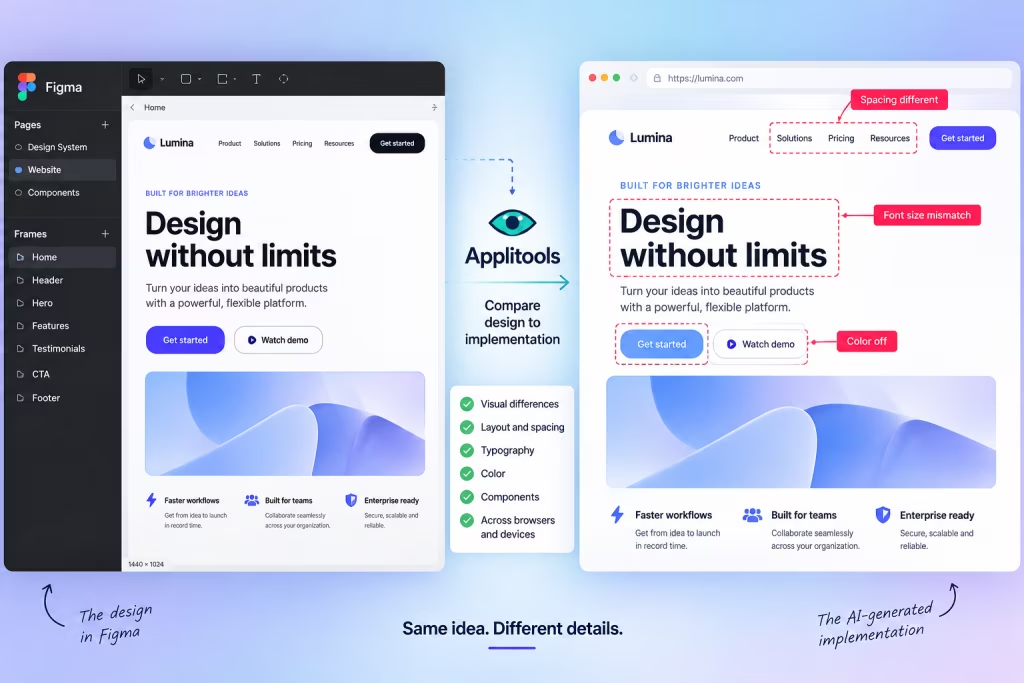
AI Can Build Your UI. Now Figma Can Tell It When It Screwed Up.
AI coding tools have become remarkably good at turning prompts into working interfaces. The awkward part comes afterward: does the thing they built actually look like the design? A new…
Cloudflare Just Gave AI Training Bots the Middle Finger
If you run a website, you probably want Google to crawl it. You probably don’t want every AI company on the planet helping itself to your content to train its models. Until…
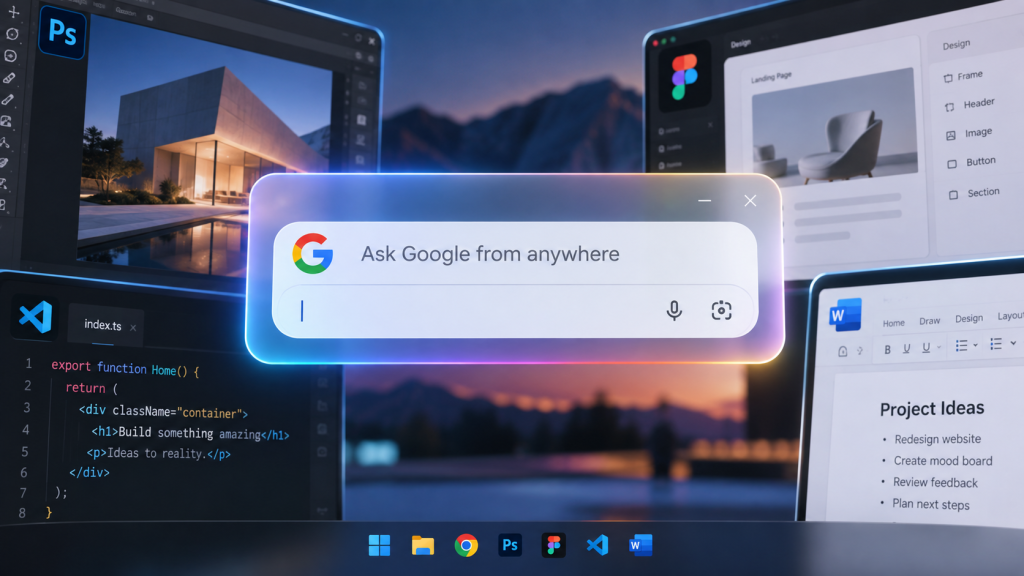
Google Is Testing a Search Bar That Works Outside Chrome
Google is quietly experimenting with a strange new version of Search: one that doesn’t seem particularly interested in staying inside Chrome. The experiment is known as Everywhere Omnibox, with “Loom” appearing in…
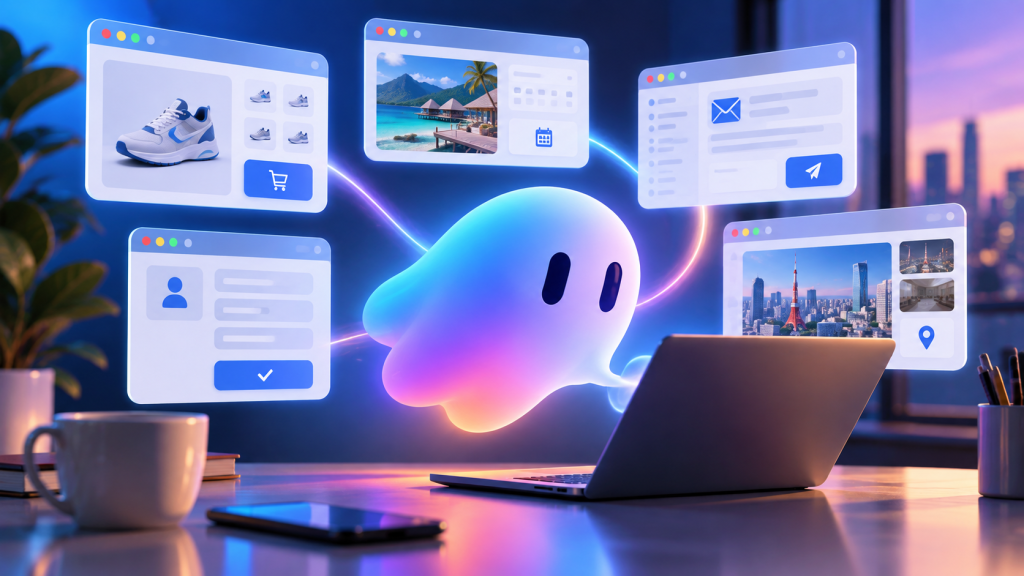
Meta Just Launched an AI That Uses Websites for You. That Could Be a Big Deal for Web Designers
Meta has launched Muse, a personal AI agent that doesn’t just tell you how to do something online. It can actually go and do it. There is an important distinction here:…