1
For over a decade, the career advice given to creatives, developers, and digital professionals has been identical, hammered into our skulls by professors, bootcamps, and LinkedIn influencers alike:
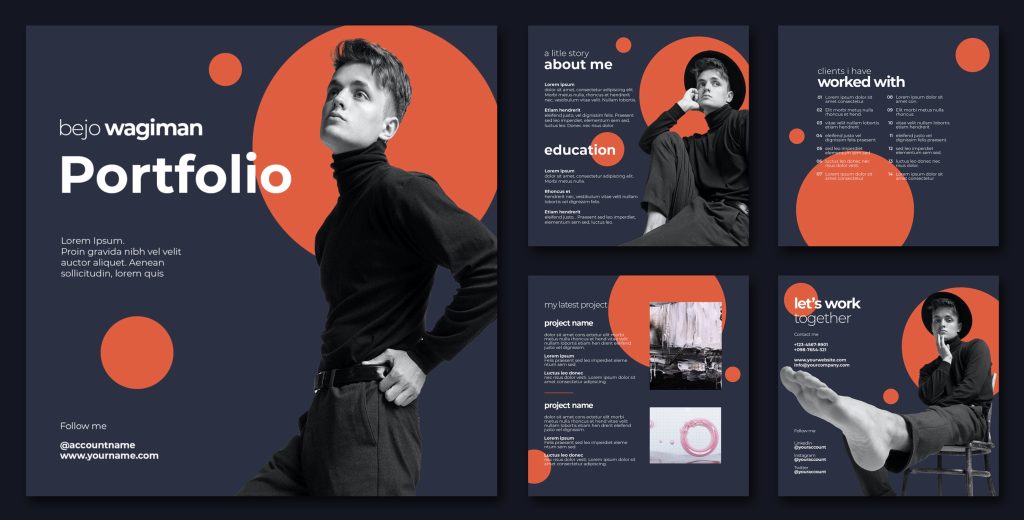
“You need a portfolio.”
So, what did we do? We spent countless unpaid weekend hours tweaking template layouts, agonizing over whether a sans-serif font looked “too corporate,” and polishing old projects into pristine, cinematic narratives. We treated our portfolios like a golden ticket—the ultimate, undeniable proof of our genius.
But if you’ve applied for a job or tried to land a freelance client recently, you’ve probably noticed something deeply unsettling. You send over that beautifully crafted link, wait for the gasps of awe… and get hit with dead silence. Or worse, an automated rejection email exactly 45 seconds later.
Let’s skip the corporate sugarcoating: The traditional portfolio is dead. It’s not just sleeping; it’s buried under a mountain of algorithm updates and cultural shifts. If you’re still relying on a static gallery of past work to get noticed, you are playing a game that no longer exists.
Let’s talk about why the old way broke, and what actually works today.
Why the Traditional Portfolio Bit the Dust
The collapse didn’t happen overnight, but a perfect storm of technology and human burnout finally killed it. Honestly, we should have seen it coming.
1. The AI Paradox (Or: “Did a Human Actually Make This?”)
Let’s address the elephant in the room. Generative AI tools can now churn out gorgeous UI mockups, flawless python scripts, and highly articulate marketing case studies in about four seconds.
Because of this, recruiters and clients have developed a massive, cynical crust. When they look at a flawless, static portfolio today, their first thought isn’t, “Wow, this person is a visionary!” Their first thought is, “I wonder if they just prompted Claude for three hours to get this.” Pristine pixels no longer equal proof of skill. Perfection has become cheap, and trust has evaporated.
2. The Great Recruiter Attention Crisis
The hiring landscape is, to use a technical term, a total circus. A single remote job posting can attract three thousand applications before the HR manager finishes their morning coffee.
No recruiter has the time—or the emotional bandwidth—to click your custom link, wait for your heavy, over-engineered Webflow animations to load, and read a 3,000-word essay on how you picked a specific shade of blue. They want to know if you can solve their exact problem, and they want to know in less than six seconds. If your value is buried under three layers of “creative storytelling,” they’re clicking Next.
3. The “Over-Polished” Lie
Traditional portfolios suffer from a severe case of hindsight bias. They present every past project as a perfectly smooth, logical journey: Problem → Research → Flawless Execution.
But anyone who has ever worked a real job knows that real work is a chaotic mess. It’s shifting deadlines, budget cuts, compromised visions, and dealing with that one stakeholder who insists on making the logo bigger. Companies have realized that “portfolio-perfect” candidates often crumble when thrown into the messy, ambiguous realities of a real business. They don’t want to see your clean trophy room; they want to know how you behave in a storm.
Out With the Old, In With the “Proof of Work”
So, if we’re throwing the traditional portfolio in the trash, what are we putting in its place? The shift is moving away from what you did three years ago and toward how you think and execute right now.
Think of it as trading a dusty museum for a live-streamed workshop.
In the old days, we relied heavily on static case studies. These were linear, heavily edited retrospectives where everything miraculously went perfectly. Today, smart professionals are shifting to building in public. This means sharing raw, real-time documentation of your current projects, experiments, and even your failures on platforms where people actually hang out, like LinkedIn, GitHub, or Substack.
Another major trap of the old model was the solo-hero narrative—you know, taking 100% of the credit for a massive corporate project that you actually built with a team of twelve other people. Recruiters see right through that now. Instead, the move is toward micro-attribution. You want to show the exact Figma components, lines of code, or copy variations you personally shipped, while explicitly explaining how you collaborated with others to make it happen.
Finally, we have to stop treating our websites like a resume in disguise—just a digital graveyard of old client logos and those weird, vague skill bars that say things like “Photoshop: 85%” (what does that even mean?). Instead, turn your presence into a thought leadership engine. Share short-form video breakdowns, product teardowns, or quick essays. Prove that you actually understand business impact and strategy, not just aesthetics.
The New Golden Rule: Don’t just show me the shiny trophy. Show me the dirt on your shoes from the hike.
How to Pivot: Your 3-Step Survival Guide
You don’t need to delete your website tonight, but you do need to change how you present yourself to the world. Here is your actionable, fluff-free pivot strategy:
Step 1: Document the Messy Middle
Instead of hiding your work until it’s perfectly polished, start sharing the process. Did you run into a weird bug today and spend two hours fixing it? Post a three-bullet-point summary of what you learned on LinkedIn or X. Did you design a terrible first draft of a landing page before finding a breakthrough? Show the before-and-after.
This builds immense trust because AI cannot replicate a hyper-specific, real-world troubleshooting story. Authenticity is the only thing AI can’t counterfeit.
Step 2: Stop Redesigning Spotify (Do “Teardowns” Instead)
Please, I beg of you, no more hypothetical redesigns of Apple Music, Netflix, or Spotify. The world has enough of them, and honestly, they usually ignore the actual business constraints those companies face.
Instead, do a “teardown” of a current, real-world business problem. Find a mid-sized company or a local startup. Look at their onboarding flow, their checkout page, or their signup emails. Write a quick breakdown: “Here is why this specific screen is likely causing them to lose customers, and here are three low-effort ways to fix it.” This immediately proves you think like a business partner who cares about revenue, not just a pixel-pusher.
Step 3: Lower the Friction (The 60-Second Rule)
If you do keep a central website, optimize it for speed and human laziness. Replace long, exhausting paragraphs of text with short, high-impact media.
A 60-second Loom video of you clicking through a live project while explaining your decision-making out loud is worth more than a dozen static pages. It proves your communication skills, showcases your personality, and confirms beyond a shadow of a doubt that you actually built the thing.
The Silver Lining
Look, I get it. The death of the portfolio feels exhausting because it forces us to abandon an old, comfortable security blanket. It means we can’t just build a website once every three years and call it a day.
But this is actually a massive opportunity.
When you stop trying to look flawlessly perfect, a lot of the pressure evaporates. You can stop pretending. In an internet that is rapidly becoming crowded with automated, clinical, AI-generated perfection, being a real human who can communicate clearly, adapt to messiness, and solve actual business problems is your ultimate competitive advantage.
Stop polishing the past. Start showing how you solve problems today.

The Ghost Site Resurrector: How Junior Designers Can Turn Digital Abandonment into Cash
There is a specific kind of sadness in the digital world. It’s the local “ghost site.” You know the one: you search for a dry cleaner or a boutique plant…

How Junior Web Designers Use Google Maps to Generate Cash
For many junior web designers, the biggest hurdle isn’t mastering the code or the latest design software—it’s the brutal reality of client acquisition. You have the skills to build a…