
1
Every few years, the tech world loves to throw a massive pity party and declare something “dead.” Flash is dead. PHP is dead. SEO is dead. Usually, it’s just pure clickbait designed to freak people out on Twitter or LinkedIn.
But if we’re being completely honest with ourselves, a massive, undeniable shift is happening right now. And this time, the panic feels a little different. Traditional web development—the actual act of sitting down and manually writing HTML, CSS, and basic JavaScript to build standard websites—is dying.
Look around. If your entire value proposition as a developer is that you know how to center a div, wire up a basic React component, or configure a standard database boilerplate, you’re looking at a pretty serious existential threat. AI models can spit out that exact code in about three seconds flat. On top of that, no-code and low-code platforms have gotten so good that a non-technical founder can launch a fully functional app over the weekend without typing a single semicolon.
The era of being a “code monkey”—someone who simply takes a Figma design and translates it into syntax like a human compiler—is coming to a close.
I know that sounds grim. If you look at Reddit or Tech Twitter lately, it feels like everyone is polishing up their resumes and preparing to work at a coffee shop. But here is the absolute truth that the doom-scrollers are completely missing: The death of traditional web development is actually the single greatest career opportunity you will ever see.
Think about it this way: when the steam shovel was invented, digging didn’t stop. We just stopped using hand shovels and started building skyscrapers. The scale of what we could create exploded.
Here is exactly why the death of old-school web dev is your ticket to a much bigger, much cooler future.
The Evolution of Your “Leverage”
Let’s take a quick trip down memory lane. In the early days of the web, being a developer meant you had to know everything. You had to manually configure physical server racks, write raw database queries from scratch, and build your own security protocols. It was tedious, slow, and brutal.
But over time, the industry did what it always does: it built layers of abstraction.
- AWS showed up and said, “Hey, don’t worry about the physical hardware anymore. We got you.”
- Frameworks like Ruby on Rails, Django, and Next.js showed up and said, “Stop rewriting authentication and routing from scratch. Just use our template.”
- npm gave us a million pre-built packages so we didn’t have to reinvent the wheel every Tuesday.
With every single one of these layers, developers didn’t lose their jobs—they became more valuable. Why? Because their leverage multiplied. Instead of spending three weeks fighting with server cables, they could spend three weeks actually building features.
AI and hyper-automation aren’t the end of programming; they are just the next logical layer of abstraction. Instead of spending your afternoon writing repetitive CRUD boilerplate or styling a basic dashboard, you can now generate it in minutes. You haven’t been made obsolete. You’ve just been promoted from the construction worker laying the bricks to the architect designing the entire skyline.
Nobody Cares About Your Code (And That’s a Good Thing)
Here is a hard pill to swallow, but it’s one that will set you free: Clients and users have never cared about your code.
They don’t care if your folder structure is pristine. They don’t care if you used Tailwind, styled-components, or raw CSS. They don’t care if your state management is perfectly elegant. They care about one thing and one thing only: Does this thing solve my problem?
Does it make their checkout process faster? Does it make their data more secure? Does it automate a painful part of their day?
When the act of writing code becomes cheap and automated, the ability to apply that code to real human problems becomes priceless.
The massive opportunity right now lies in moving up the value chain. If you can shift your mindset from “I am a person who writes syntax” to “I am a person who solves business problems using software,” your value immediately skyrockets.
When you aren’t bogged down fighting with syntax errors all day, you suddenly have the mental bandwidth to focus on what actually matters:
- System Architecture: Figuring out how complex data pipelines talk to each other safely and efficiently.
- Product Thinking: Understanding user experience. Asking, “Should we even build this feature, or is there a simpler way to solve the user’s frustration?”
- AI Integration: Figuring out how to plug intelligent, dynamic LLM experiences into software, making apps feel alive rather than just static forms.
The Era of the “1-Person Software Company”
This is the part that gets me the most excited. Historically, launching a meaningful software product required a literal village. You needed a frontend dev, a backend specialist, a DevOps engineer, a designer, and a product manager. It required tens of thousands of dollars or a massive round of venture capital just to see if people liked your idea.
Today, because automation handles the grunt work of writing the baseline code, that entire pipeline can live inside a single person’s laptop.
The barrier to entry to build something real has completely collapsed. A single developer with a sharp mind and a clear vision can now build, deploy, optimize, and scale a product that serves thousands of users worldwide.
This means your future isn’t just about hoping some big tech company gives you a corporate job. It’s about autonomy. It means you can build your own micro-SaaS, launch niche digital products, or work as a high-tier consultant who charges premium rates because you can deliver an entire product in a fraction of the time it used to take a whole agency.
How to Play the New Game (and Win)
If you want to thrive in this new landscape, you have to stop playing by the old rules. Stop collecting coding certificates like Pokemon cards. Don’t waste your time memorizing a ninth JavaScript framework just because it’s trending on GitHub.
Instead, pivot your focus toward the skills that machines can’t easily replicate:
- Become a Master Architect: Focus on the big picture. Learn how cloud infrastructure, APIs, and databases fit together. A machine can write an isolated function perfectly, but it still struggles immensely to design a complex, secure, and cost-effective ecosystem from scratch.
- Learn the Language of Business: Talk to users. Understand how companies actually make money and save money. If you can bridge the gap between technical possibilities and business strategy, you will be utterly irreplaceable.
- Become an AI-Augmented Developer: Do not look at AI as the enemy; look at it as your most eager junior developer. Learn how to prompt effectively, learn how to audit and debug AI-generated code, and use these tools to speed up your workflow by 10x. The developers who embrace this will completely outpace the ones who resist it.
The Bottom Line
Web development isn’t going away. The internet is only getting bigger, and the world’s hunger for software is growing exponentially every single year.
The “death” of the old way of coding is just clearing out the boring stuff. It’s freeing you from the mundane, repetitive tasks that frankly used to burn us all out anyway. It’s handing you a massive megaphone and asking, “Okay, now that the coding is fast, what amazing things are you actually going to build?”
The tools have changed. The leverage has increased. The game has evolved. Take a deep breath, leave the old ways behind, and go build something incredible.

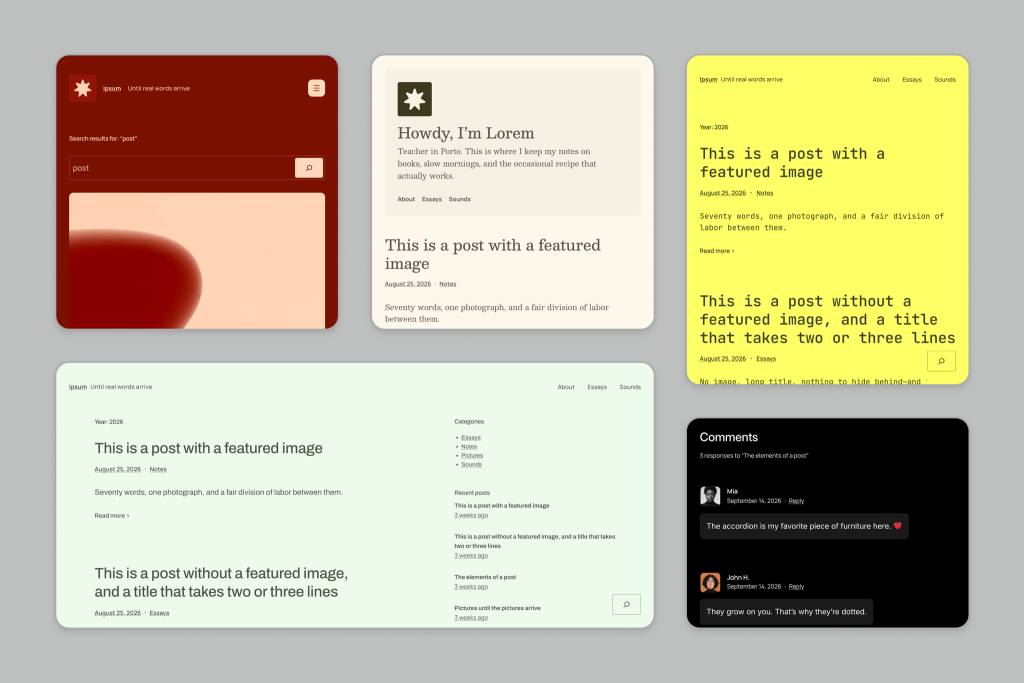
Today, WordPress Ended a 16-Year Tradition… Meet Ipsum!
WordPress just broke one of its longest-running traditions. Today, the WordPress team unveiled Ipsum, the proposed new default theme for WordPress 7.2. But the biggest news isn’t really Ipsum itself. WordPress…
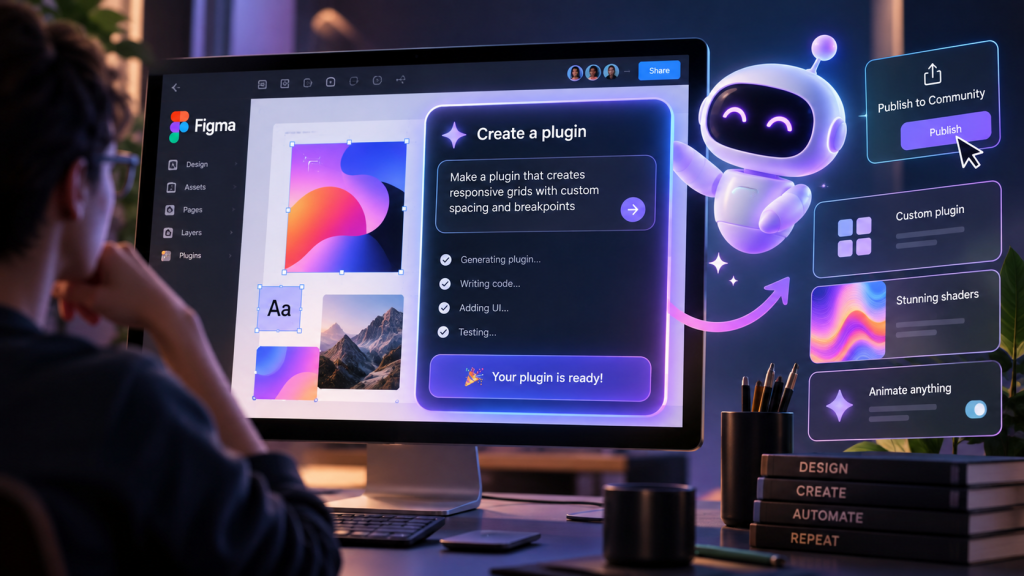
Figma Is Turning Designers Into Plugin Makers
For years, most designers looking to extend Figma followed a familiar software ritual: you had a problem, searched for a plugin, installed it, and hoped somebody had already built exactly…

TikTok Is Quietly Putting Web Apps Inside Its App
TikTok is already where millions of people go to watch videos. But buried inside its developer documentation is something considerably more interesting for web designers: TikTok has built a framework…

Figma is the New Dreamweaver: How Modern Prototyping Tools are Trapping Us in 2018
Look, I love Figma. If you’re anything like me, you probably spend eight hours a day inside it, neatly organizing your component variants, color tokens, and beautifully nested frames. It’s…

The 2-Second Rule: How to make your website feel like magic in 2026
In the digital landscape of 2026, we have reached a fascinating crossroads. For years, we treated web performance as a technical chore—something for the developers to fix in the basement…

The Digital Renaissance: Why 2026 is the Most Exciting Year to be a Web Creator
If you have been following the chatter on tech forums lately, you might think the web design and development industry is packing its bags. There’s a lot of talk about…