
1
In the digital landscape of 2026, we have reached a fascinating crossroads. For years, we treated web performance as a technical chore—something for the developers to fix in the basement after the “real” work of design was finished.
But as we move deeper into an era defined by instant gratification, specialized hardware, and AI-driven browsing, speed has evolved into something much more profound. It is now the primary way we show respect for a human being’s time.
If you want to stay relevant today, you have to stop thinking about your website as a collection of static pages and start thinking about it as a high-performance engine. Here is the comprehensive guide to making your site feel like magic in 2026.
The Shift from Loading to Interacting
For the longest time, we obsessed over “Load Time.” We sat with stopwatches waiting for the hero image to appear. But in 2026, the goalposts have moved. Users no longer wait for a page to “finish” loading before they start interacting with it. They click, they scroll, and they tap the moment they see even a hint of content.
This has made a metric called Interaction to Next Paint (INP) the most important number on your dashboard. INP doesn’t care how fast your logo appeared; it cares how long the user waited for the menu to open after they tapped it. To win here, you have to clear the “clutter” out of the browser’s main brain.
We achieve this by using Web Workers—essentially hiring a second brain for the browser to handle heavy background calculations while the main thread stays focused entirely on the user’s touch. When a user taps a button and it reacts in under 200 milliseconds, it creates a neurological sense of fluidity that makes your brand feel premium, regardless of your actual price point.
The New Language of Images and Type
We’ve finally moved past the era of heavy JPEGs and bulky font files. In 2026, the gold standard for imagery is AVIF. It sounds technical, but the human impact is simple: you get breathtaking, high-definition photography at a fraction of the file size.
When you switch to an automated AVIF pipeline, you aren’t just saving data; you’re ensuring that the user on a crowded subway or a rural connection sees your product in all its glory without the “stutter” of a slow-loading image.
The strategy for 2026 is “Responsive Image Sets,” where the browser doesn’t just pick a size, but picks a compression level based on the user’s current data speed. Similarly, we’ve revolutionized how we handle typography. The layout shift—that annoying jump where text moves around as the page loads—is now considered a major design failure.
By hosting your fonts locally and utilizing Variable Fonts, you can pack every weight and style into one tiny file. This eliminates the “flash of unstyled text” and makes your site feel stable and grounded the moment it appears. It’s about creating a calm visual environment where the content feels like it was already there, waiting for the user.
Moving the Engine to the Edge
The most significant architectural shift of 2026 is the death of the “Central Server.” We no longer send a user in Tokyo to a server in Virginia to ask for a piece of data. Instead, we use The Edge. This means your website’s logic is distributed across thousands of tiny servers located in almost every major city on earth.
By running your code at the Edge, the physical distance data has to travel is reduced from thousands of miles to just a few dozen. This isn’t just about speed; it’s about reliability. When your site lives everywhere at once, it becomes nearly impossible to crash.
This “Edge-first” mentality also allows for incredible personalization. You can show different content to a user in rainy London than you do for someone in sunny Sydney, and you can do it instantly without the user ever seeing a loading bar. It’s the ultimate form of digital hospitality.
The Invisible Speed of AI and HTTP/3
Perhaps the most “2026” development is the use of predictive AI. We now have lightweight scripts that can watch how a user moves their mouse. If the AI sees the cursor drifting toward the “Checkout” button with a certain velocity, it can start loading the checkout page in the background before the user even clicks.
By the time the finger hits the screen, the page is already there. It feels like the website is reading your mind, creating a zero-latency experience that was once the stuff of science fiction.
Underpinning all of this is the move to HTTP/3. This new protocol is designed specifically for the modern, mobile world. Unlike older versions of the web, HTTP/3 is resilient. If you walk out of your house and your phone switches from Wi-Fi to 5G, HTTP/3 handles that handoff without dropping the connection. Your website doesn’t “hiccup”—it just keeps flowing. This is vital for 2026, where the majority of web traffic happens on the move.
The War on JavaScript Bloat
In 2026, the most successful websites are going on a “JavaScript diet.” For years, we piled on framework after framework, but now we are seeing a return to Server-Side Rendering (SSR) and Static Site Generation (SSG). The goal is to send as little code to the user’s device as possible.
The “Islands Architecture” has become the standard. Instead of turning the whole page into a complex application, we only use JavaScript for the small pieces that actually need it—like a search bar or a shopping cart. The rest of the page is pure, fast HTML. This reduces the “Hydration” time—the period where a page looks ready but doesn’t actually work yet. In 2026, if your page looks ready, it is ready.
Resource Prioritization and Fetch Priority
We’ve also become much smarter about how we tell the browser what to load first. In 2026, we use Fetch Priority API to tell the browser exactly which image is the “Hero” and which scripts can wait. Instead of letting the browser guess, we explicitly mark the most important content. This ensures that the thing the user came to see—the product photo or the headline—is the very first thing that hits the screen.
We also utilize Early Hints, a feature that allows the server to tell the browser which files it will need while the server is still thinking about how to build the page.
This “head start” can shave hundreds of milliseconds off the total load time, making the difference between a site that feels “fast” and a site that feels “instant.”
The Ethics of a Fast Web
Finally, we have to talk about why this matters beyond just “making more money.” A fast website is an accessible website. When you optimize for speed, you are making your information available to people who don’t have the latest $1,200 smartphone or a fiber-optic connection.
You are building a more inclusive internet. In 2026, your carbon footprint is also tied to your site’s weight. Every kilobyte sent across the world requires energy; by trimming the fat, you are literally making the internet greener.
In 2026, we’ve realized that bloat is a choice, and usually, it’s a selfish one. Every third-party tracking script or unnecessary high-res video we add is a tax we are placing on the user’s device and their attention. By stripping away the digital weight and focusing on raw performance, we aren’t just making “better websites”—we are making the internet a more humane, efficient, and pleasant place to be.
The winners of this year aren’t the ones with the flashiest animations; they are the ones who get out of the way and let the user achieve their goals as fast as humanly possible.


Traditional Web Development is Dead…(and Honestly? Good Riddance.)
Every few years, the tech world loves to throw a massive pity party and declare something “dead.” Flash is dead. PHP is dead. SEO is dead. Usually, it’s just pure…
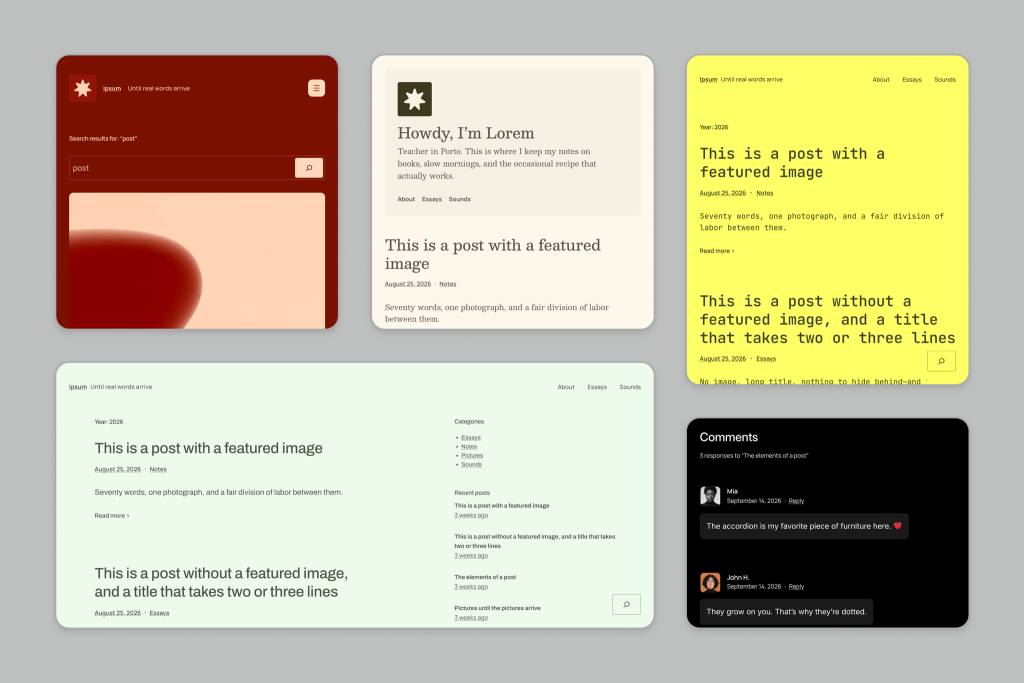
Today, WordPress Ended a 16-Year Tradition… Meet Ipsum!
WordPress just broke one of its longest-running traditions. Today, the WordPress team unveiled Ipsum, the proposed new default theme for WordPress 7.2. But the biggest news isn’t really Ipsum itself. WordPress…
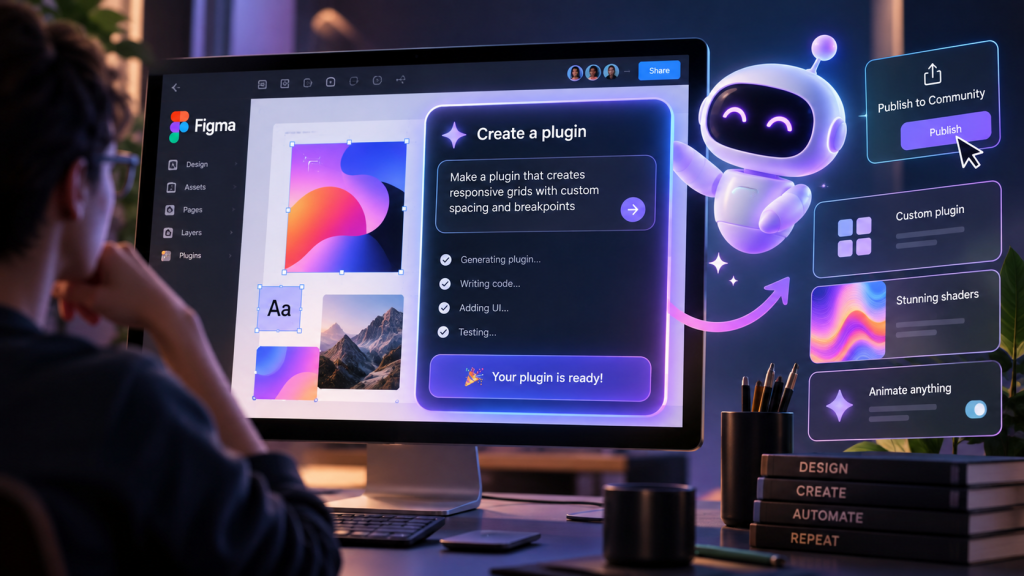
Figma Is Turning Designers Into Plugin Makers
For years, most designers looking to extend Figma followed a familiar software ritual: you had a problem, searched for a plugin, installed it, and hoped somebody had already built exactly…
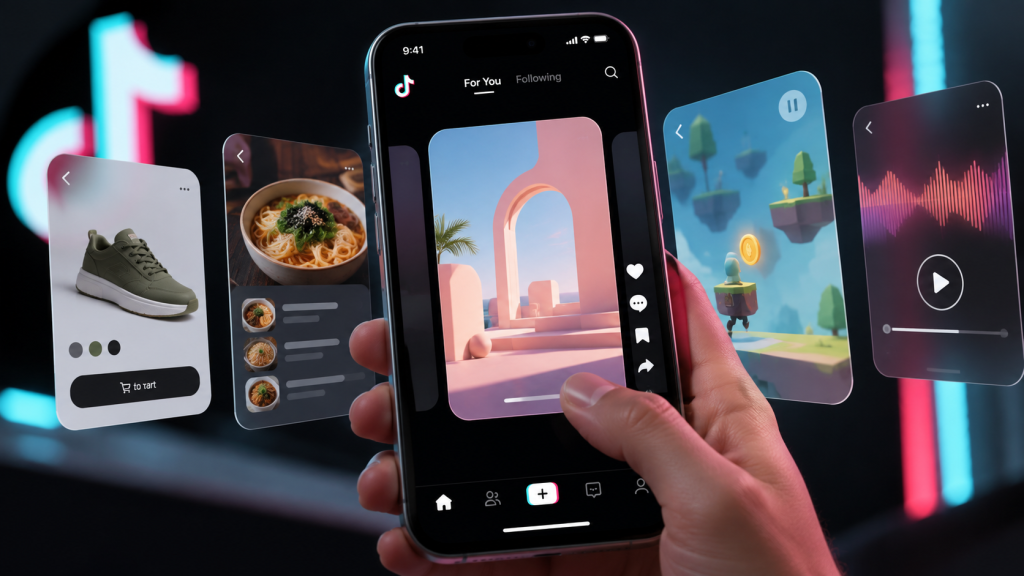
TikTok Is Quietly Putting Web Apps Inside Its App
TikTok is already where millions of people go to watch videos. But buried inside its developer documentation is something considerably more interesting for web designers: TikTok has built a framework…

Figma is the New Dreamweaver: How Modern Prototyping Tools are Trapping Us in 2018
Look, I love Figma. If you’re anything like me, you probably spend eight hours a day inside it, neatly organizing your component variants, color tokens, and beautifully nested frames. It’s…
The Digital Renaissance: Why 2026 is the Most Exciting Year to be a Web Creator
If you have been following the chatter on tech forums lately, you might think the web design and development industry is packing its bags. There’s a lot of talk about…