1
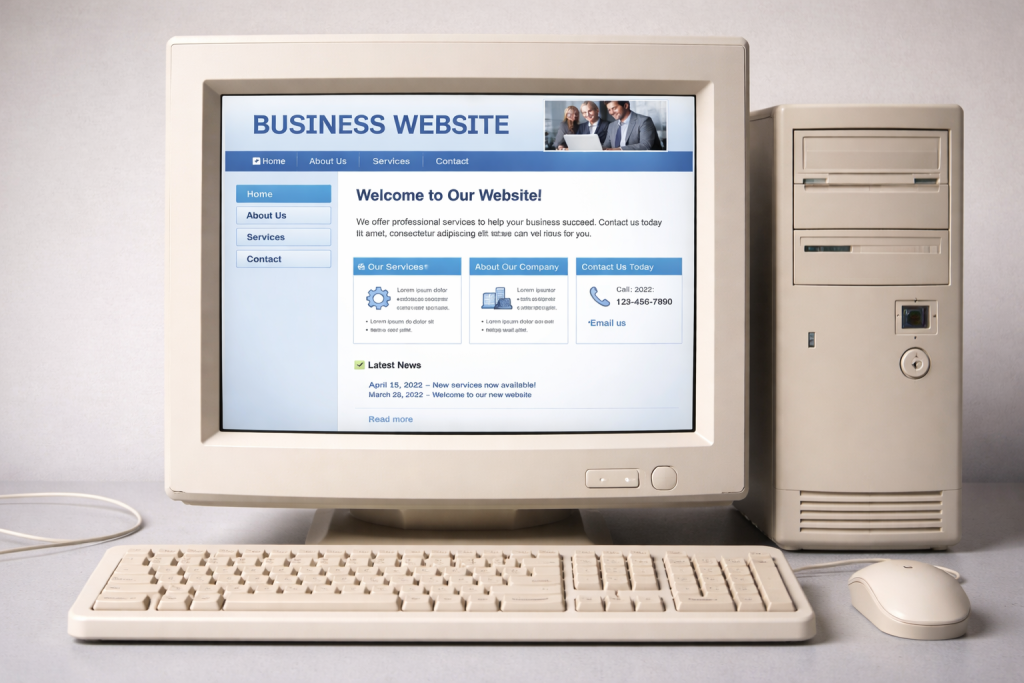
There is a specific kind of sadness in the digital world. It’s the local “ghost site.” You know the one: you search for a dry cleaner or a boutique plant shop, click their link, and you’re transported back to 2021.
The “Latest News” section mentions a holiday sale that ended three years ago. The copyright in the footer says 2022. On a mobile device, the navigation menu overlaps the logo like a pileup on the freeway.
For the business owner, this site is a source of low-level shame they’ve learned to ignore. For a junior web designer, however, this site is a golden ticket. In my last piece, we looked at how juniors are using Google Maps to identify businesses that have great reviews but no website at all. That was about building from scratch.
Today, we’re talking about the “Ghost Site Resurrector”—a strategy that is faster, higher-converting, and perfectly suited for the 2026 design landscape. Here is how you can use digital abandonment to generate $1,000–$2,000 per project with less than four hours of total engagement.
The “Last Updated” Gold Mine
The secret to this hustle isn’t just looking at the design; it’s looking at the clock. Start by simply browsing local Google Maps listings. Instead of looking for “missing” websites, look for ones that exist but are clearly neglected.
The markers are easy to spot. If the footer date is more than two years old, they’ve likely stopped caring. If the “News” or “Blog” feed features a last post about COVID-19 protocols or a “Grand Opening” from five years ago, the site is a ghost town.
Most importantly, perform the “thumb test.” If you can’t click the phone number or navigate the menu with one hand while on a smartphone, the site is a legal and functional liability. In 2026, a site that hasn’t been updated in three years isn’t just “old”; it’s invisible to the new AI-driven search engines that favor fresh, structured data. This is your leverage: you aren’t selling a website; you are selling visibility.
The 15-Minute Mockup
Junior designers often fail because they send “cold emails” asking for a meeting. Business owners don’t want meetings; they want problems to go away. Instead of an email, send a Visual Transformation.
First, take a high-resolution screenshot of their current, broken homepage. Next, use a modern AI builder like Framer AI or Wix Harmony to generate a “2026 Refresh.” Give the AI their business name, industry, and existing brand colors.
Spend ten to twenty minutes cleaning up the work. Ensure the “Call to Action” is massive, the typography is readable, and the mobile view is flawless. You want to create a version of their business that looks like the most successful version of themselves.
The Pitch: The 30-Second Loom
Now, record a screen share using Loom. Do not talk about “UX,” “Sitemaps,” or “Minimalism.” Business owners don’t care about design theory; they care about friction and trust.
Tell them you noticed their site still lists 2023 hours and that the mobile experience is likely costing them 40% of their traffic because customers can’t find the ‘Book Now’ button. Show them the 2026 “Mobile-First” version you already built.
When they see their own brand looking modern and fast, the psychological “Endowment Effect” kicks in. They already feel like they own the better version; they just need to pay you to flip the switch. You are presenting a finished product, not a proposal.
The “Resurrection Package”
The beauty of being a “Resurrecter” is that you aren’t selling a three-month custom build. You are selling a Deployment. Because you’re using modern AI-assisted tools and existing content from their old site, you can offer a flat fee.
While beginners might start at $500, a seasoned junior in 2026 can easily command $1,500 for a weekend’s work.
Your scope remains tight: a 3-to-5 page responsive site, updated SEO metadata for AI agents, and a “Live” footer that auto-updates the year. For a junior, two of these a month is a solid living. For the business owner, it’s a tax-deductible way to stop feeling embarrassed when a customer asks for their URL.
Technical SEO: The AI-Agent Advantage
In 2026, the game has changed. It’s no longer just about Google Search; it’s about LLM Optimization. When a user asks an AI agent, “Where is the best Italian food near me that is open now?”, that agent scrapes the web.
If a business has a ghost site with broken Schema markup, the AI agent will skip them because it can’t verify their hours or menu. Part of your “Resurrection” service is ensuring their site is readable for AI.
You explain to the client that you aren’t just making the site look pretty for humans; you’re making it “talk” to the AI assistants that drive modern commerce. This technical edge justifies your premium pricing.
Scaling the Hustle
Once you have three successful resurrections under your belt, you stop being a freelancer and start being a Specialist. You can niche down—focusing exclusively on “Medical Practice Refreshes” or “Attorney Site Resurrections.”
Each niche has specific pain points. For doctors, it’s patient intake forms. For contractors, it’s project galleries. By specializing, your AI-assisted mockups become even faster to produce.
You can eventually automate your lead generation by setting up alerts for businesses that haven’t updated their SSL certificates or those whose domain registration is nearing expiration. These are the “heartbeats” of a dying site that needs your help.
Why This Works in 2026
We are entering an era of “Value-First” freelancing. The days of charging $5,000 for a basic WordPress site built over twelve weeks are fading because the tools have gotten too good.
But business owners don’t have the time to use those tools. They have shops to run, pipes to fix, and food to cook. They are drowning in “digital debt.”
By finding the “Ghost Sites,” you are identifying people who already understand they need a website—they paid for one once—but simply lack the bridge to the modern web. You are that bridge.
Go start digging through the Google Maps archives—there’s a lot of ghosts out there waiting to be brought back to life.


How Junior Web Designers Use Google Maps to Generate Cash
For many junior web designers, the biggest hurdle isn’t mastering the code or the latest design software—it’s the brutal reality of client acquisition. You have the skills to build a…