
1
We like to pretend that creativity thrives in total freedom — blank canvas, infinite possibilities, pure artistic autonomy. But if you’ve ever actually tried to design with no brief, no budget, no client, and no deadline, you probably discovered something unexpected: freedom can be paralyzing.
Constraints — those annoying limits on time, money, tools, brand guidelines, or scope — are the friction that ignites creativity. Designers may roll their eyes at them, but secretly, most of us need them to do our best work. Here’s why.
The Myth of Creative Freedom
Designers love to fantasize about the project without restrictions: no stakeholders, no revisions, no style guide, no approval chain. Just pure creative flow. But that fantasy tends to fall apart in reality. When anything is possible, nothingfeels right.
Psychologists call this “the paradox of choice.” Too many options don’t expand creativity — they suffocate it. The blank canvas becomes a void. Without some kind of framework, your brain spins in infinite directions and loses focus.
Think of it like jazz: the magic isn’t in playing every note, but in what happens inside the limits of a chord progression. The same goes for design. A project’s boundaries give you something to push against — and that tension is where originality happens.
The Science Behind Constraints and Creativity
Research backs this up. In a 2010 study from the Journal of Personality and Social Psychology, researchers found that “creative constraints” — clear limits on resources or scope — consistently led to more innovative ideas than open-ended tasks. When people were told to work with fewer materials or tighter deadlines, they produced more original outcomes than those with unlimited flexibility.
Why? Because limits trigger divergent thinking — our brain’s ability to connect unrelated ideas and find novel solutions. Constraints act like mental springboards: they force you to think sideways instead of straight ahead.
Neuroscientist Arne Dietrich explains it like this: “When the prefrontal cortex encounters obstacles, it recruits other, less obvious neural pathways.” Translation: when your main plan is blocked, your brain starts getting creative.
Deadlines: The Designer’s Frenemy
If you’ve ever pulled a 2 a.m. sprint before a big delivery, you know the bizarre clarity that comes when time runs out. That’s not magic — it’s pressure converting anxiety into focus.
The “Yerkes-Dodson Law” in psychology describes how moderate stress boosts performance. Too little stress, and you procrastinate. Too much, and you panic. But just the right amount? That’s when flow state happens.
Deadlines create urgency, which quiets overthinking. You stop polishing pixels and start making decisions. A ticking clock narrows your focus from “What if?” to “What’s essential?” — and that’s often where the best design instincts surface.
Constraints as a Source of Identity
Look at the most iconic design movements — Bauhaus, Swiss Style, Brutalism, Minimalism. Each emerged under specific constraints: material shortages, printing limitations, political censorship, or strict modernist philosophy.
Bauhaus wasn’t minimalist for aesthetics’ sake; it was born from industrial limitations. Helvetica wasn’t about neutrality; it was about functional clarity in a time when legibility was king.
Even digital design heroes — like early web creators — worked under severe technical boundaries: tiny bandwidth, primitive browsers, 256-color palettes. Those constraints forced cleverness. It’s no accident that the “90s web” aesthetic is making a comeback; it had personality precisely because designers had to improvise.
When you think about it, every design style is a story of adaptation to limits. Those limits shape identity. They give us boundaries to define ourselves against.
The Comfort of Rules
Designers may gripe about “brand police,” but most secretly find comfort in a well-defined system. A good set of rules — grid, typography hierarchy, spacing system — doesn’t restrict you; it liberates you from decision fatigue.
Cognitive psychology calls this bounded creativity: by narrowing your decision space, you free up mental energy for deeper thinking.
That’s why designers build design systems, even though they sometimes feel like cages. Once the system’s in place, you can focus on storytelling, interaction, or emotion instead of redrawing buttons. Rules let you channel creativity instead of drowning in it.
When Constraints Go Too Far
Of course, there’s a breaking point. Not all constraints are helpful. Bureaucratic overcontrol, risk-averse managers, or suffocating approval layers can smother experimentation.
When designers say they hate constraints, they usually mean these constraints — the kind that stifle curiosity or punish failure. The problem isn’t the limit itself; it’s when the limit serves process over purpose.
A healthy constraint guides direction. A toxic one blocks exploration. The difference lies in whether the boundary creates clarity or confusion.
If the rule helps you make better decisions faster, it’s useful. If it exists “because that’s how we’ve always done it,” it’s dead weight.
The Designer’s Double Life: Rebel and Engineer
Part of the designer’s psyche is inherently rebellious. We like to break rules, test boundaries, challenge expectations. But we’re also engineers of experience — we thrive on structure and precision.
This duality explains our love-hate relationship with constraints. We want freedom within form. Too much rigidity, and the rebel dies. Too much freedom, and the engineer panics.
That tension is productive. It’s why design isn’t art — it’s problem-solving wrapped in emotion.
The best designers don’t fight constraints; they negotiate them. They know when to obey, when to bend, and when to subvert. They use limits as creative leverage, not creative excuses.
Historical Proof: Innovation Born from Limits
Some of the most celebrated designs came from tight constraints:
- The London Underground map simplified a chaotic geography into a clean visual system because Harry Beck ignored geographic accuracy — a brilliant compromise born from necessity.
- Apple’s early iPod UI had to fit a music library into a tiny monochrome screen. The result? A navigation model so intuitive it defined an era.
- NASA’s Apollo computer interface was built under severe memory and power constraints, forcing engineers to invent new methods of display and control — the same logic that influences minimalist dashboards today.
Each breakthrough wasn’t despite constraints but because of them. The boundaries forced designers to prioritize clarity, simplicity, and essence.
The Constraint You Don’t See: Audience
There’s another kind of limit every designer faces — one that’s invisible but non-negotiable: the user’s brain.
Human attention, perception, and cognition are finite. You can’t design a UI that requires 12 simultaneous actions or a poster with 40 typefaces and expect comprehension. Cognitive load is the ultimate constraint.
That’s why the best designers talk about empathy and usability: they’re not moral virtues; they’re practical boundaries. You’re designing for brains that get tired fast. And within those limits, your creativity must dance.
The Modern Twist: AI and Infinite Options
Ironically, the AI design era has brought us back to the problem of too much freedom. With tools that can generate hundreds of layouts, colors, or logos in seconds, designers are once again paralyzed by possibility.
AI removes old constraints — time, skill, iteration speed — but introduces new ones: the challenge of meaning, authorship, and taste.
In a world where anything can be generated instantly, the constraint shifts from production to curation. The designer’s job becomes setting the right boundaries — defining prompts, style guides, and filters that align with intent.
Even now, it’s the human act of narrowing the field that turns noise into design.
The Creative Paradox: Freedom Through Limits
Here’s the irony: true freedom doesn’t come from eliminating constraints; it comes from choosing them wisely.
When you define your own boundaries — aesthetic rules, brand principles, design systems — you create a framework that reflects your values. You’re not boxed in; you’re anchored.
Constraints provide meaning. They make creative work about something. Without them, design becomes decoration — endless, aimless variation with no narrative spine.
The most fulfilling projects are often the ones that frustrate us most. The impossible deadline, the tiny budget, the stubborn stakeholder — those are the moments that forge creative muscle.
We don’t love constraints because they’re easy. We love them because they make us better.
How to Harness Constraints Instead of Fighting Them
- Reframe the problem. Instead of saying “I can’t because,” say “What if I must?” Turn the limit into a design brief.
- Find the hidden parameter. Every constraint implies a priority — uncover it. Tight budget? Prioritize clarity. Short deadline? Prioritize simplicity.
- Add your own limits. Set artificial restrictions to spark creativity: design using one color, one font, one layout grid. You’ll surprise yourself.
- Prototype fast. Don’t wait for perfect conditions. The faster you move, the more constraints reveal themselves — and guide you.
- Treat feedback as another boundary. Instead of resisting client notes, ask: “What’s the real constraint behind this request?” Often it’s an unspoken fear or goal.
Mastering design isn’t about escaping constraints — it’s about orchestrating them.
The Secret We Don’t Admit
We’ll keep complaining, of course. Designers love to dramatize the struggle: the impossible brief, the endless revisions, the budget cuts. But deep down, we know the truth — we’d be lost without them.
Constraints give us a reason to care, a problem to solve, a target to aim for. They’re what separate design from chaos.
So the next time you catch yourself cursing the brand guide, the deadline, or the fickle client, remember: this is the friction that makes your ideas real. Without it, there’s no resistance — and without resistance, there’s no spark.
The truth is simple: we don’t just tolerate constraints — we crave them.

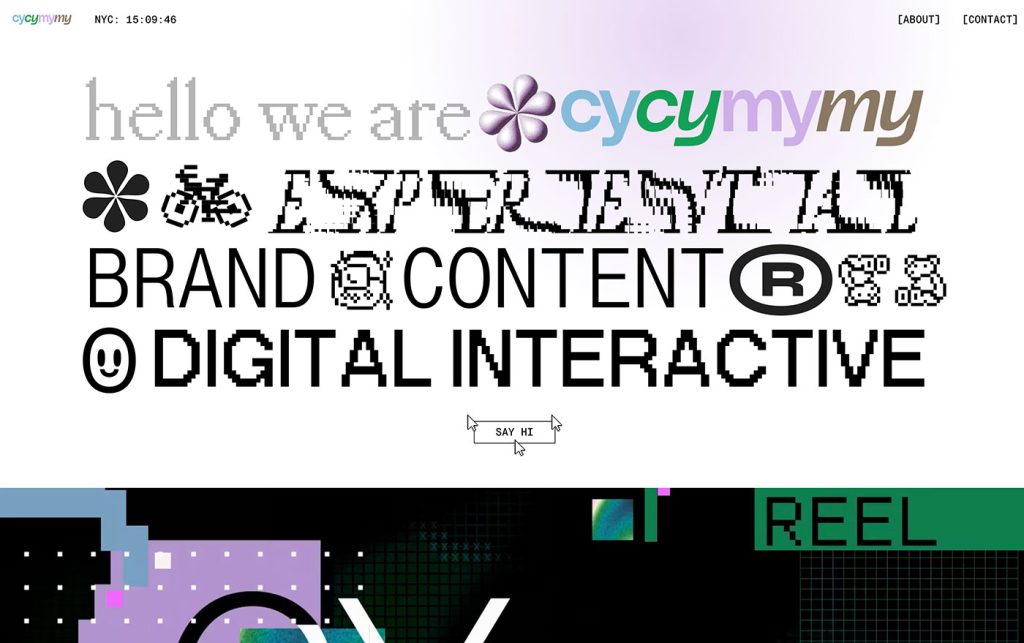
Not Useless: Why Experimental Websites Matter More Than You Think
Every once in a while, a site comes along that makes you pause, grin, and think: Wait—websites can do that? Maybe it’s a portfolio where the cursor morphs into a liquid blob,…
How Aspect Ratios Define Perception, Rhythm, and Flow
Designers talk about color, typography, and hierarchy constantly. But proportion—the silent structure beneath everything—rarely gets the same respect. Every card, photo, video, and module in an interface lives within a…
Token Fatigue: When Abstraction Eats Itself
In theory, design tokens were supposed to save us. They were the missing link between design and code, a neat way to abstract decisions—colors, spacing, typography, motion—into a unified language…
AI as Art Director: Can Machines Develop Taste?
Let’s get this out of the way: AI doesn’t have taste. It has statistics. It knows what’s popular, what’s trending, what’s most likely to earn a double-tap — but it…

Pixel Nostalgia: Why We Miss the 90s Web (Even If It Was Ugly)
It’s easy to laugh at the 90s web now — the blinking GIFs, Comic Sans banners, table layouts held together with duct tape and hope. But beneath all that chaos…
Exciting New Tools for Designers, February 2026
There are so many new – and good – tools for designers out there right now. From tiny bits of artificial intelligence to icons that delight, there’s something to help…