1
Web development has always been a strange cocktail of creativity, technology, and a bit of chaos. In its earliest days, it was pure alchemy—weaving simple code into pages that, somehow, transmitted information across the globe.
Fast forward to today, and it feels like we’re standing on the precipice of something radically different: AI isn’t just a tool anymore; it’s becoming the co-author of the web itself.
Let’s take a deep dive. Not a skimming-the-surface history lesson, but a real, nuanced look at where we started, where we’ve landed, and where AI might be steering this ship next.
The Humble Beginnings: The Static Web (Web 1.0)
Back in the 1990s, the web was a quiet place—or at least a silent one. Think static HTML pages, maybe a table or two if you were feeling fancy. No CSS to pretty things up, no JavaScript for interactivity. Sites were basically digital pamphlets. Text-heavy, image-light, and definitely not responsive.
Tools were primitive. Developers hand-coded everything in Notepad or early WYSIWYG editors like Microsoft FrontPage.
Then came Macromedia Dreamweaver, one of the first widely-used professional-grade tools, allowing for more complex designs without needing to write every line of code by hand. It made web development accessible to a broader audience—drag, drop, and tweak your way to a functional website.
For animation and interactivity, Adobe Flash (originally by Macromedia) was the kingpin. Flash introduced motion graphics, video integration, and even rudimentary game design into the web landscape.
Entire sites were built in Flash, offering rich, albeit often slow-loading, experiences. It wasn’t without its downsides—proprietary, CPU-heavy, and eventually phased out—but it represented a giant leap from static pages.
In those early days, FTP clients like WS_FTP and pixel graphics editors like Paint Shop Pro were also part of the essential toolkit. Debugging tools were rudimentary at best, often amounting to manually scanning pages for typos.
Yet, this was revolutionary. Suddenly, information wasn’t confined to books or encyclopedias. You could publish content that anyone with an internet connection could access. It was slow, clunky, and static, but it was new.
Enter the Dynamic Web (Web 2.0)
The early 2000s brought broadband, which changed everything. As internet speeds increased, so did expectations.
Dynamic content became the norm. Instead of static HTML pages, we saw the rise of server-side languages like PHP, ASP.NET, and Ruby on Rails. Websites could now react to users—displaying different content based on user behavior, location, or preferences.
JavaScript matured. Libraries like jQuery made it easier to handle browser inconsistencies and add interactivity. AJAX came along, allowing data to load in the background without refreshing the entire page. This was the era of Google Maps, Facebook, and the explosion of blogging platforms.
Design evolved too. CSS got more powerful, and the concept of web standards finally took hold. Designers began to care about typography, whitespace, and usability. The birth of responsive design—largely credited to Ethan Marcotte—meant that websites finally worked across devices.
The web was no longer a digital magazine rack; it was an ecosystem. Interactive, social, and constantly updating.
The Appification of the Web
By the 2010s, the line between “website” and “app” blurred. With the smartphone explosion came the demand for app-like experiences in the browser.
Enter single-page applications (SPAs) and frameworks like AngularJS, React, and Vue.js. These frameworks moved much of the work to the client side. Instead of loading page after page from a server, SPAs loaded one page and dynamically updated as users interacted with it.
REST APIs and later GraphQL enabled more efficient data fetching. Microservices architecture emerged, making backend systems more modular and scalable.
The aesthetics shifted, too. Flat design—championed by Apple—took over skeuomorphism. Minimalist interfaces, mobile-first thinking, and performance optimization became the holy trinity.
All the while, tools evolved. GitHub made version control accessible. npm changed how developers shared code. Build tools like Webpack and Babel managed complexity. Cloud hosting abstracted away much of the infrastructure headache.
Developers weren’t just building pages; they were crafting full-blown applications.
Where We Are Now: The Modern Web
Today’s web feels like both the culmination of decades of work and the foundation for a complete reinvention.
We have powerful front-end frameworks (Next.js, Svelte, SolidJS) that prioritize performance and developer experience. Jamstack architecture—using static site generators and serverless functions—is pushing web performance to new heights.
Progressive Web Apps (PWAs) blur the line even further between web and native apps, offering offline support, push notifications, and access to device hardware.
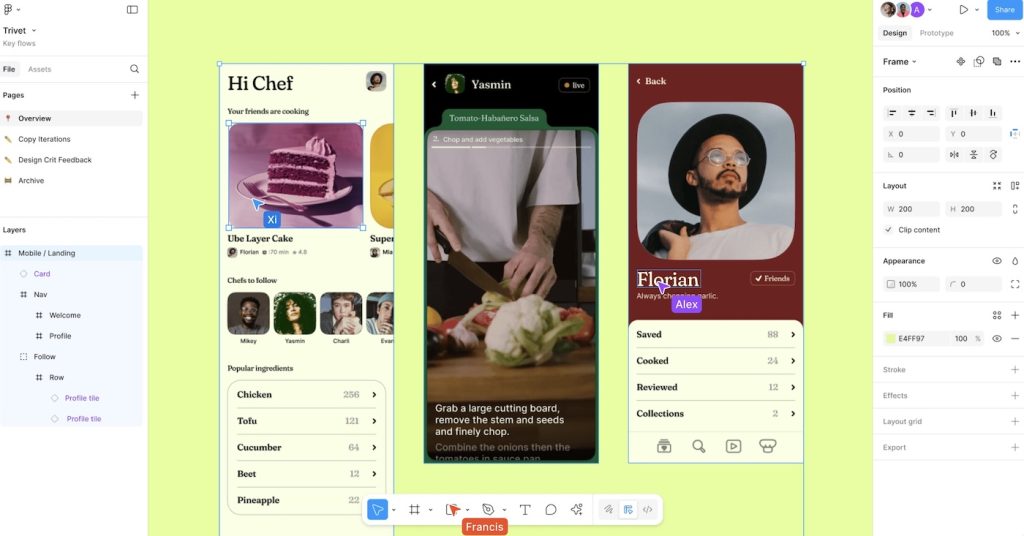
Design systems and component libraries help maintain consistency across sprawling digital products. Tools like Figma and Storybook have made collaboration between developers and designers almost frictionless.
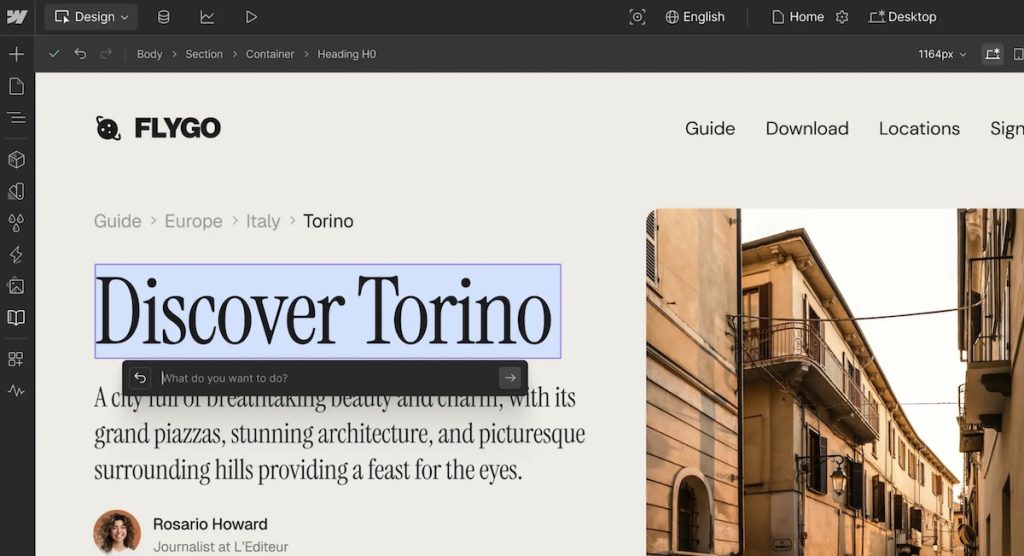
AI already has a toehold: from autocomplete in code editors (like GitHub Copilot) to AI-powered design suggestions in platforms like Webflow.
The “modern web” is complex but thrilling. It’s powerful. It’s democratized. It’s also—let’s be honest—kind of overwhelming.
The AI Horizon: Where We’re Headed
Here’s where things get really interesting.
AI isn’t just assisting with small tasks anymore. It’s beginning to fundamentally reshape the very nature of web development.
Code Generation and Automation
AI can now write production-ready code. GitHub Copilot is the appetizer; full-course meals are on the way.
Large Language Models (LLMs) can spin up entire sites from a prompt. Tell it “Build me a landing page for a vegan bakery” and—voilà—you have working HTML, CSS, and JavaScript.
As models improve, they’ll design architectures, optimize performance, and even make UX recommendations.
Will developers become obsolete? Not exactly. But the role will shift. Instead of “writing” code, developers will increasingly “curate” and “direct” it—much like a movie director guiding actors.
AI-First Frameworks
We’re seeing the beginning of frameworks that are AI-native. Instead of a human laboriously stitching together components, AI will infer the best layout, color scheme, and even microinteractions based on data.
Imagine Figma files that aren’t designed manually but are generated based on user research, best practices, and current trends.
Personalization at Scale
Personalization has always been the dream, but it’s been hard to pull off without mountains of data and a small army of analysts.
AI changes that.
Imagine a website that rewrites itself—the copy, the layout, even the navigation structure—based on who you are, your preferences, your history.
Two users visit the same e-commerce site and see entirely different experiences, optimized for them.
It’s Minority Report-level stuff, minus the creepy ads (hopefully).
Conversational Interfaces and the Death of Traditional UI
Why click through nested menus when you can just ask?
“Find me a black dress in my size under $100.”
AI-driven conversational interfaces (chatbots, voice assistants) will move from gimmick to norm. The traditional point-and-click UI may become a secondary option—a fallback for when AI fails.
This will fundamentally change how we design websites. Fewer dropdowns, more dialog systems.
The End of the “Page”
The concept of a “web page” itself might be fading. Why have a page when you can have an experience tailored dynamically in real time?
Think modular content blocks assembled on the fly. The web won’t just load content; it will compose it uniquely for each user session.
This requires rethinking CMSs (Content Management Systems), too. Static pages won’t cut it. Content will need to be atomic, flexible, and interoperable.
Headless CMS platforms like Contentful and Sanity are already paving the way, but future CMSs will be AI-powered content orchestration engines.
Ethics and the Dark Side
Of course, it’s not all sunshine and rainbows.
Hyper-personalization can easily morph into manipulation. Data privacy concerns will escalate. Algorithmic bias in AI-generated experiences could marginalize users.
Who owns AI-generated code? Who’s responsible if an AI-designed interface leads to poor outcomes, even harm?
Regulation will have to catch up, but developers and designers will also need to adopt ethical frameworks proactively.
The New Developer
Tomorrow’s web developer won’t be someone who “codes websites.” They’ll be:
- Prompt engineers: Crafting the right inputs to guide AI tools.
- Curators: Selecting, modifying, and approving AI-generated outputs.
- Ethicists: Embedding privacy and bias checks into their workflows.
- Experience designers: Thinking not in terms of screens and pages, but of conversations, micro-moments, and user journeys.
And—most importantly—they’ll need to be adaptable. Tools will come and go faster than ever. Learning to learn will be the most critical skill.
So, Where Does This Leave Us?
Web development has gone from a hand-coded, solitary pursuit to a hyper-collaborative, AI-augmented field.
In a way, it’s poetic. The web was always about connection—between information, between people. Now, even the act of building the web is becoming a collaboration between humans and machines.
The future of web development isn’t human or AI; it’s human plus AI.
We’re not handing over the reins; we’re learning to drive with a co-pilot.
And the road ahead?
Endless.
If you thought the web was wild before, you haven’t seen anything yet.

Not Useless: Why Experimental Websites Matter More Than You Think
Every once in a while, a site comes along that makes you pause, grin, and think: Wait—websites can do that? Maybe it’s a portfolio where the cursor morphs into a liquid blob,…
AI as Art Director: Can Machines Develop Taste?
Let’s get this out of the way: AI doesn’t have taste. It has statistics. It knows what’s popular, what’s trending, what’s most likely to earn a double-tap — but it…
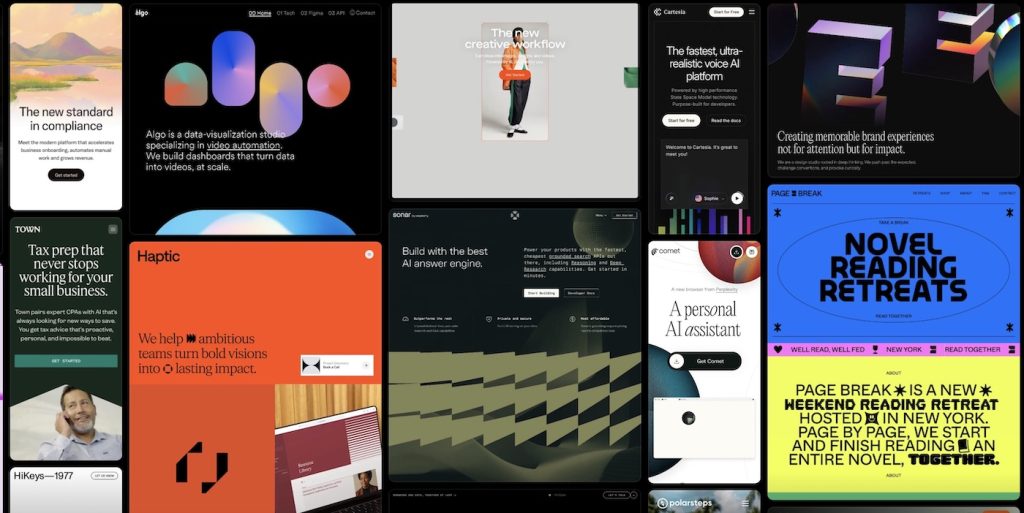
Framer vs. WordPress vs. Webflow: Who Actually Wins in 2026?
Every few years, the web design world crowns a new “ultimate platform.” Once upon a time, it was WordPress. Then Webflow rose as the cool, code-free disruptor. Then Framer entered…
Density vs. Clarity: The Core Tension in Modern UI Design
Every generation of designers seems to rediscover the same paradox: the more information we can display, the less anyone can process. The web is bursting with pixels that compete for…
What Figma Got Wrong About Design Systems
When Figma first revolutionized collaborative design, it promised something that sounded irresistible: true consistency at scale. Design systems became the new religion, and Figma was its temple. Tokens, components, variants —…

Your Brand Just Evolved: The Rise of AI-Generated Identities
For most of design history, a brand has been a fixed thing — a logo, a color palette, a tagline, a style guide locked in a PDF somewhere. The goal…