
1
Designers would spend weeks crafting the perfect, pixel-perfect dream in Figma, only to hand it over and see it come back looking like a “close enough” cousin once it hit the browser.
Developers, on the other hand, were stuck playing the role of highly overqualified translators, manually copying hex codes and padding values like it was 2005. It was slow, it was frustrating, and frankly, it was a waste of everyone’s talent. It felt like we were building the future of the internet using a process from the era of fax machines.
But in 2026, the “handoff” is dead. And honestly? Good riddance.
We’ve entered a wild new era where the wall between design and code has been smashed by AI agents. We’re not just collaborating anymore; we’re living in the same brain. This isn’t just a minor update to our workflow—it’s a total reimagining of what it means to build for the web. Here’s why this shift is the most exciting—and controversial—thing to happen to our industry in years.
The End of the “Pixel Police”
We’ve all been there. The designer breathes down the developer’s neck because a button is 2 pixels off, or the developer sighs because the designer used a “custom” easing curve that’s a nightmare to code. This constant back-and-forth wasn’t just annoying; it was a massive drain on the project’s creative energy.
Now, we use Contextual Scaffolding. Instead of a static file, the designer hands over a “Design DNA”—a set of rules that an AI agent actually understands. The developer doesn’t “build” the header anymore; they point an agent at the Figma artboard and say, “You know our Tailwind tokens. Make this happen.”
Within minutes, the site is 85% finished. Is it controversial? Absolutely. Some developers feel like their “craft” is being automated away. But let’s get real: the “craft” of manually writing CSS grid layouts was never the fun part. It was the digital equivalent of laying bricks.
By letting AI handle the scaffolding, we’re finally skipping the chores and going straight to the party—the part where we solve real problems and build unique experiences.
The Designer is Now “In the Code” (And it’s Okay!)
This is where it gets spicy. For years, the golden rule was: Designers stay in Figma, Developers stay in VS Code. Crossing the streams usually meant broken layouts, messy CSS, and legendary merge conflicts. It was a separation of church and state that kept things organized but kept the process slow.
But today, designers are acting as Operators. In shared AI workspaces, a designer can literally talk to the staging site. They can tell an agent, “This entrance animation feels a bit ‘meh.’ Make it snappier, use a more aggressive curve, and trigger it earlier.” The agent writes the code, the designer sees the result instantly, and the developer doesn’t have to touch a single line of CSS.
It’s a terrifying thought for some purists, but it’s a superpower for the product. It allows the person with the visual vision to actually execute that vision in the final medium. The designer is finally empowered to refine the feel of the site without having to beg for a ticket in the next sprint or wait two weeks for a “UI polish” phase that may never come.
The Developer as the “Movie Director”
If the AI is doing the “grunt work” of building components and nudging pixels, what is the developer doing? They haven’t been replaced; they’ve been promoted. They are now the System Architects.
Instead of worrying about padding-top, they are worrying about the integrity of the system. They are the directors on a movie set, making sure the AI agents don’t get “too creative” and start writing spaghetti code. They handle the complex logic, the heavy-duty API integrations, and the overarching “Git Flow.”
This is a much more human role. It requires more communication, more high-level strategy, and significantly less mindless typing. It’s about being a curator of a living system rather than a bricklayer. It moves the developer from the engine room to the cockpit, focusing on how the whole machine functions rather than just making sure the bolts are tight.
The “Parallel Crunch”: No More Waiting
The best part? The “Handoff Bottleneck” is officially a relic. We’ve all felt that pre-launch panic where the entire team is paralyzed, waiting for the one developer who knows how to update the hero image or fix a typo in the footer. It turned launch week into a hostage situation.
Now, we work in Parallel Workspaces. While the developer is hardening the database and ensuring the security protocols are airtight, the Product Manager is using an agent to fix copy and the Designer is using an agent to polish the mobile breakpoints.
We’re all in the codebase at the same time, but because we’re all following the same “Design DNA” and agentic guardrails, we aren’t stepping on each other’s toes.
This turns the “crunch” into a high-speed team sport. It’s collaborative, it’s fast, and it removes the resentment that builds when one person becomes the gatekeeper for every tiny change.
The Bottom Line: It’s About the Spark
At the end of the day, AI hasn’t made web design “robotic.” If anything, it’s stripped away the robotic parts of our jobs to make room for the human ones. By removing the tedious, manual translation between design and code, we’ve cleared the path for the spark of creativity.
In the time it used to take to build a single static mock-up, we can now test three different wild, interactive ideas in a live browser. We’re building faster, yes, but we’re also building with more soul because we aren’t exhausted by the process of getting it live. We have the energy to sweat the details that actually matter to the user.
The handoff is dead, the “Operator” era is here, and the web is going to be a much more interesting, diverse, and vibrant place because of it. The question is no longer “Can we build this?” but “What should we build?” Are you ready to stop translating and start creating?

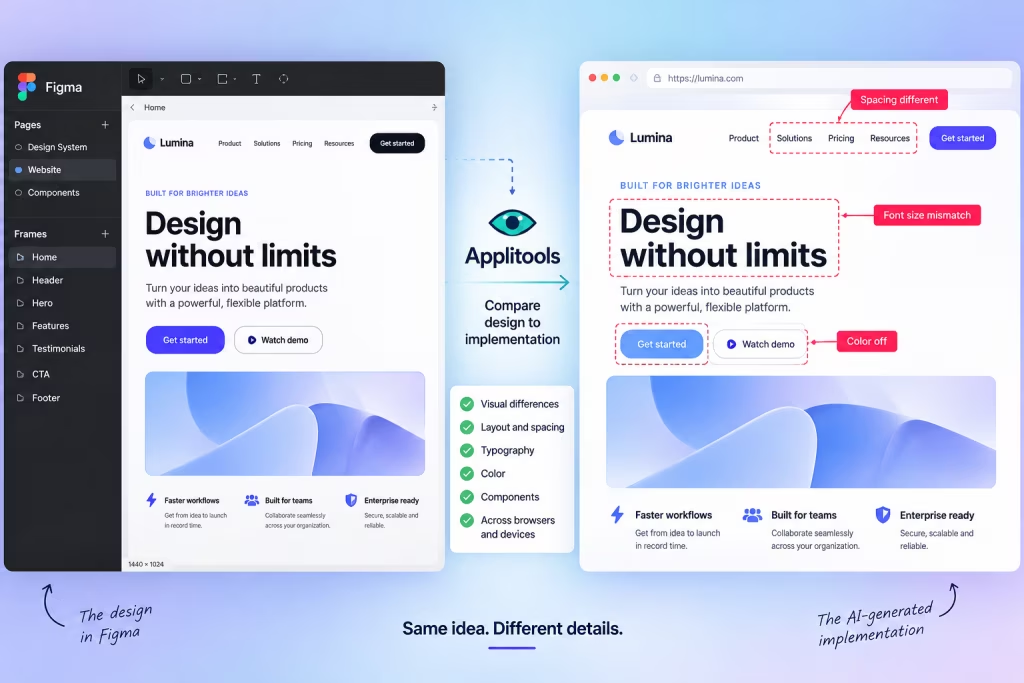
AI Can Build Your UI. Now Figma Can Tell It When It Screwed Up.
AI coding tools have become remarkably good at turning prompts into working interfaces. The awkward part comes afterward: does the thing they built actually look like the design? A new…

Cloudflare Just Gave AI Training Bots the Middle Finger
If you run a website, you probably want Google to crawl it. You probably don’t want every AI company on the planet helping itself to your content to train its models. Until…
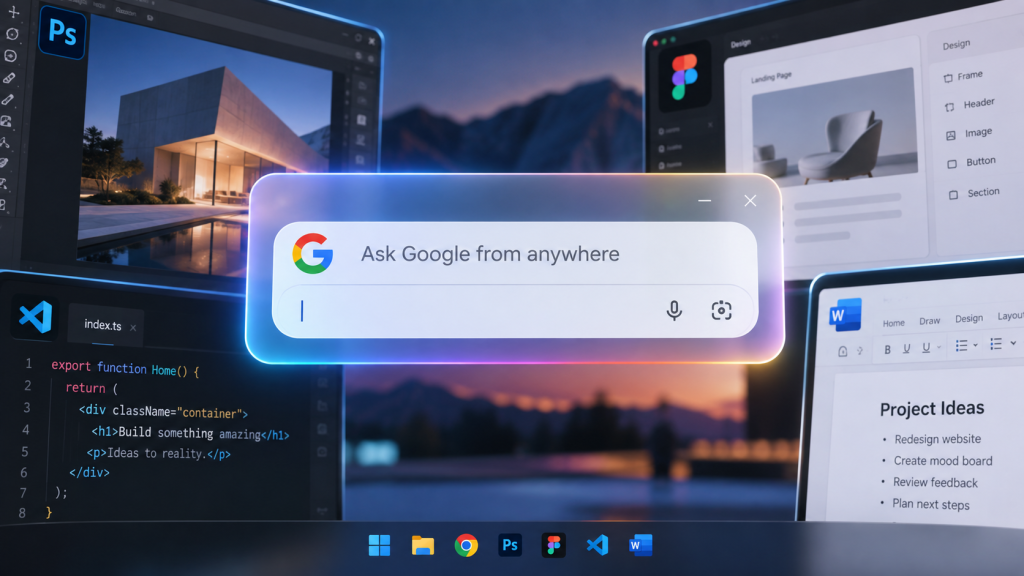
Google Is Testing a Search Bar That Works Outside Chrome
Google is quietly experimenting with a strange new version of Search: one that doesn’t seem particularly interested in staying inside Chrome. The experiment is known as Everywhere Omnibox, with “Loom” appearing in…

Meta Just Launched an AI That Uses Websites for You. That Could Be a Big Deal for Web Designers
Meta has launched Muse, a personal AI agent that doesn’t just tell you how to do something online. It can actually go and do it. There is an important distinction here:…

The “100x Developer” Paradox: Is AI “Brain Fry” Killing the Craft?
The “10x Developer” used to be a myth—a legendary creature who could out-code a whole team through sheer brilliance and an unhealthy amount of caffeine. Then came Large Language Models…

10 Ways to Build Radical TRUST in the Age of AI Junk
We have reached the era of the “Instant Website.” You can now whisper a few sentences into a chatbot, wait for your instant coffee to dissolve, and watch a fully…